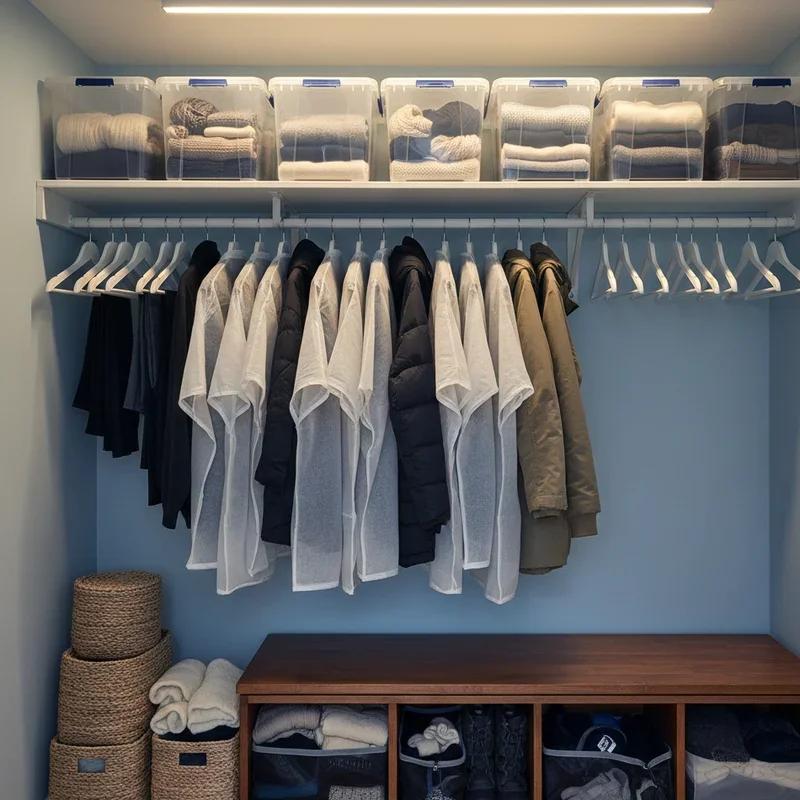
15 Belt Storage Ideas to Keep Your Closet Tidy
Discover 15 creative belt storage ideas to organize your closet. From DIY hooks to drawer dividers, declutter your accessories today.
How many times have you wrestled with a tangled mess of belts while rushing to get dressed? If you're like most of us, your belts probably live in a drawer somewhere, twisted together like a leather pretzel, or worse, draped over random hooks where they slip off faster than ice cream melts in summer. Sound familiar? Belt storage might seem like a tiny detail in the grand scheme of closet organization, but it's actually the secret sauce to a truly functional wardrobe. Think about it: when your belts are organized, you can actually see what you own, grab what you need in seconds, and keep those expensive leather pieces from cracking or creasing. Whether you're a minimalist with three trusty belts or a fashion enthusiast with a collection rivaling a department store, these storage solutions will turn your belt chaos into organized bliss. Ready to give your belts the VIP treatment they deserve?
1. Classic Belt Hangers
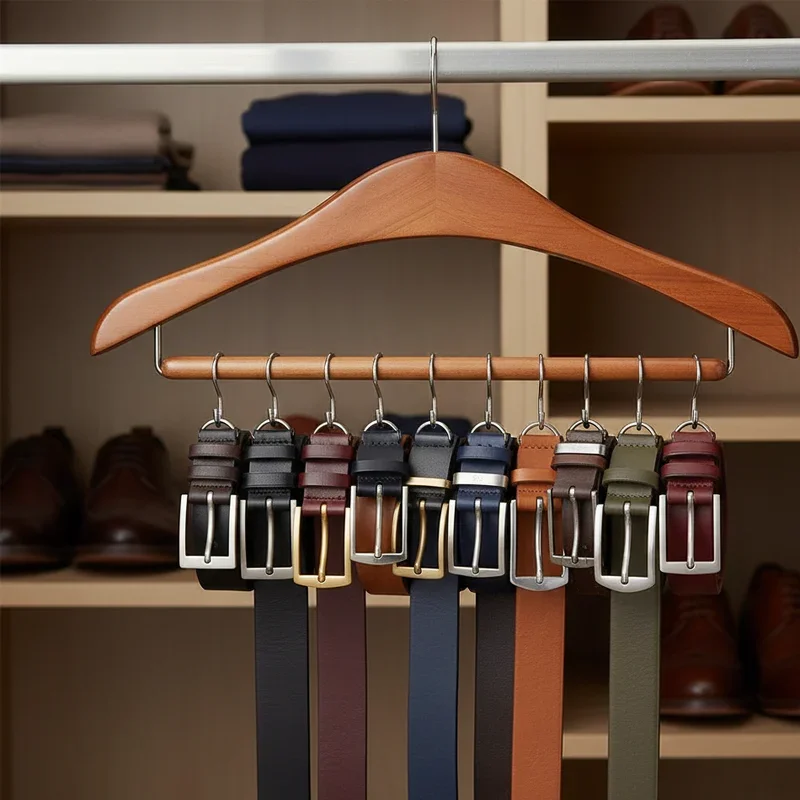
Sometimes the oldies really are the goodies, and classic belt hangers prove this perfectly. These trusty organizers feature multiple hooks or rings that hold anywhere from five to twenty belts, keeping them visible and wrinkle-free like soldiers standing at attention. You'll find options ranging from wooden hangers that match your other closet accessories to sleek chrome versions that scream modern sophistication. The beauty of these hangers lies in their simplicity: just loop your belts through the designated spots and hang the entire unit on your closet rod. They swing freely, making it easy to browse your collection without removing the whole hanger. Choose hangers with rubberized grips to prevent leather belts from slipping off during your morning scramble. The vertical storage saves precious closet real estate while keeping each belt's shape intact, preventing those annoying permanent creases that ruin your professional look.
2. Drawer Divider Systems
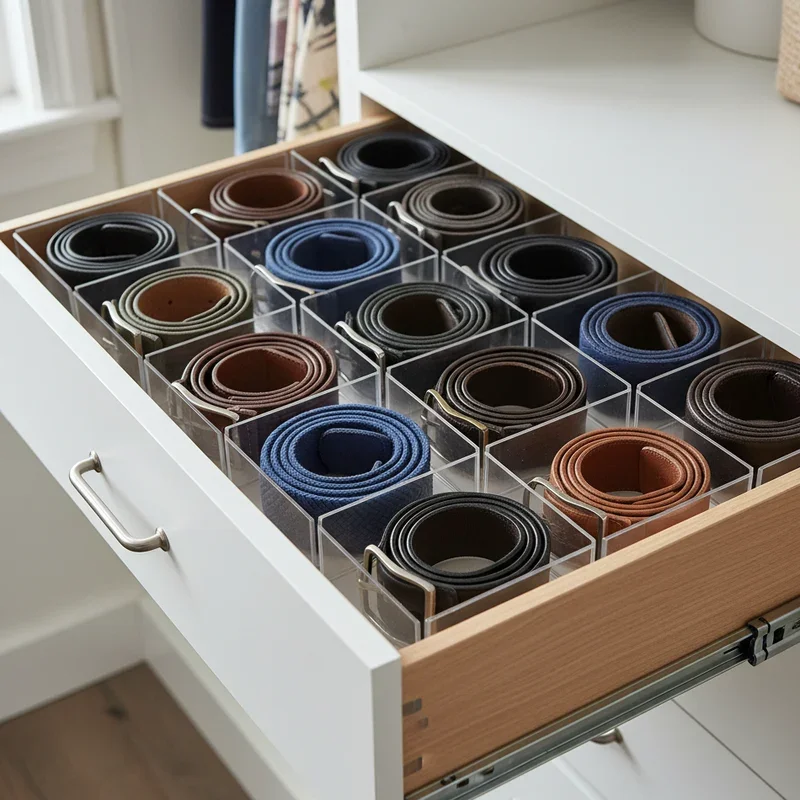
Transform that junk drawer into a belt boutique with adjustable drawer dividers that create perfect compartments for each belt. These customizable systems let you roll belts into neat spirals, displaying them like cinnamon rolls in a bakery case where everything looks delicious and accessible. The divided sections prevent belts from tangling while making it easy to spot that perfect brown leather belt for your khakis. Many dividers adjust to accommodate different belt widths, from skinny fashion belts to substantial Western styles. Cedar dividers add a touch of luxury while naturally repelling moths and moisture that could damage leather. The horizontal layout means no belt gets buried at the bottom of a pile, and you can organize by color, material, or occasion. Some systems include labels or clear tops, turning belt selection into a quick visual scan rather than a treasure hunt.
3. Wall-Mounted Belt Racks
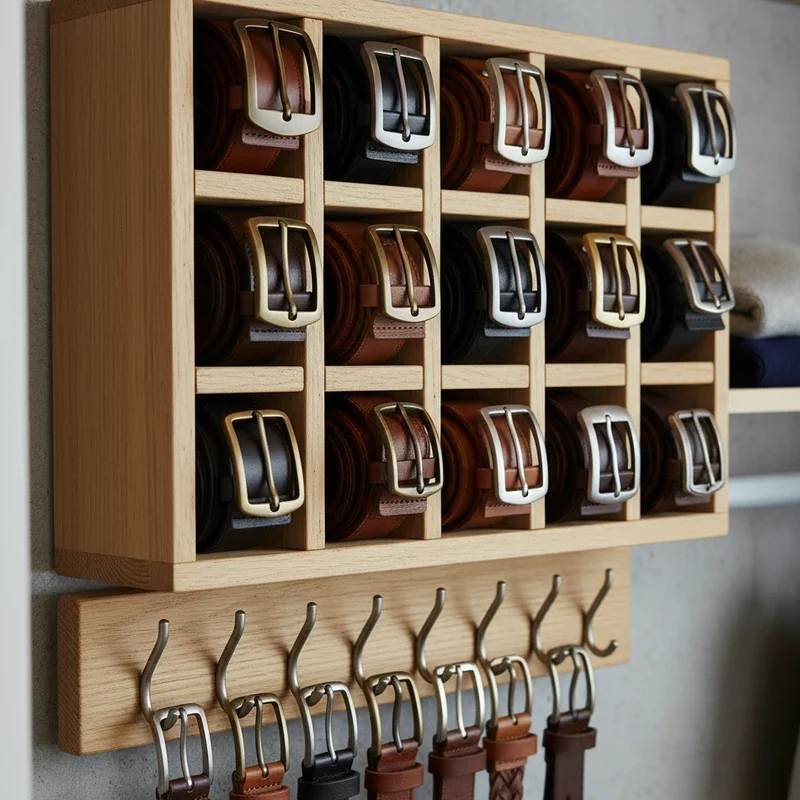
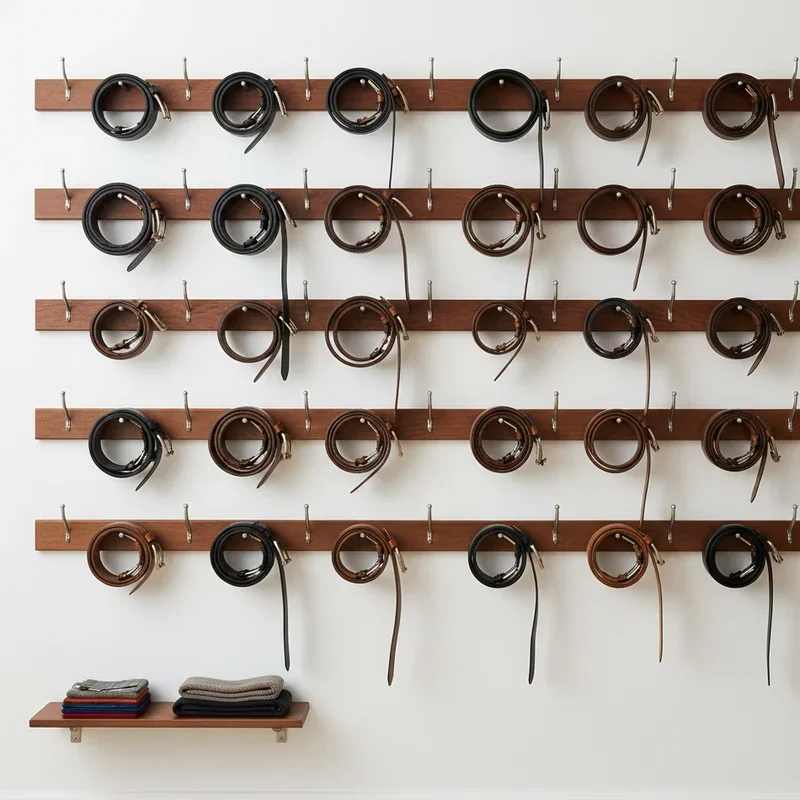
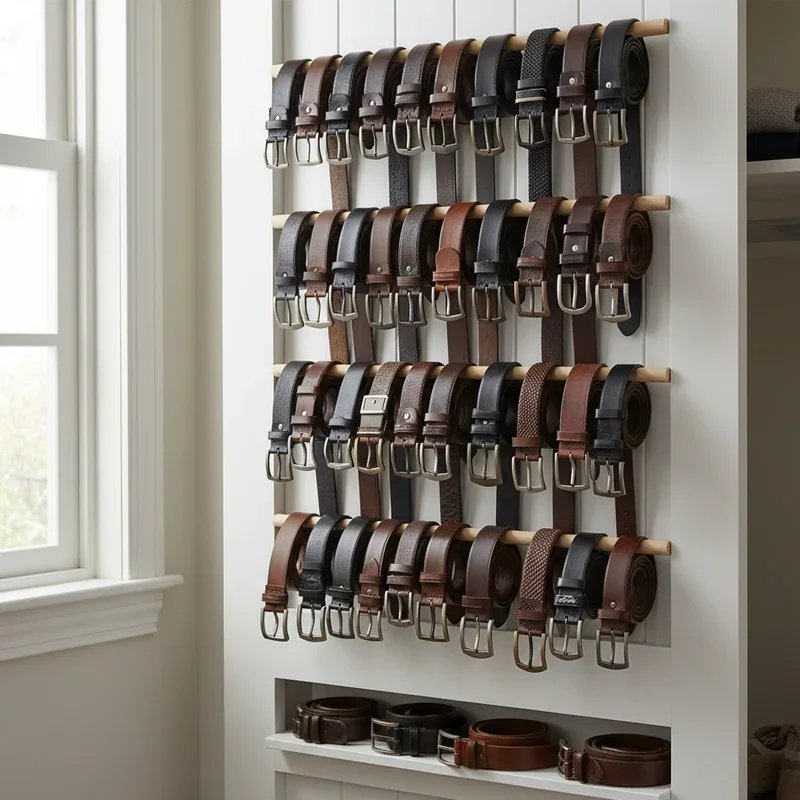
Empty wall space becomes prime storage territory with wall-mounted belt racks that turn your accessories into functional art. These racks range from simple peg strips to elaborate designs featuring individual hooks that showcase each belt like a gallery display. Installing them inside your closet or on a bedroom wall creates easy access while freeing up drawer and hanging space for other items. Choose from materials like brushed nickel for contemporary vibes, rustic wood for farmhouse charm, or acrylic for an invisible floating effect. The wall-mounted approach works brilliantly for heavy-duty belts that might stretch out on hangers over time. Position racks at eye level for everyday belts and higher for special occasion pieces. Some designs include small shelves on top for cologne, watches, or other accessories, creating a complete dressing station.
4. Over-the-Door Organizers
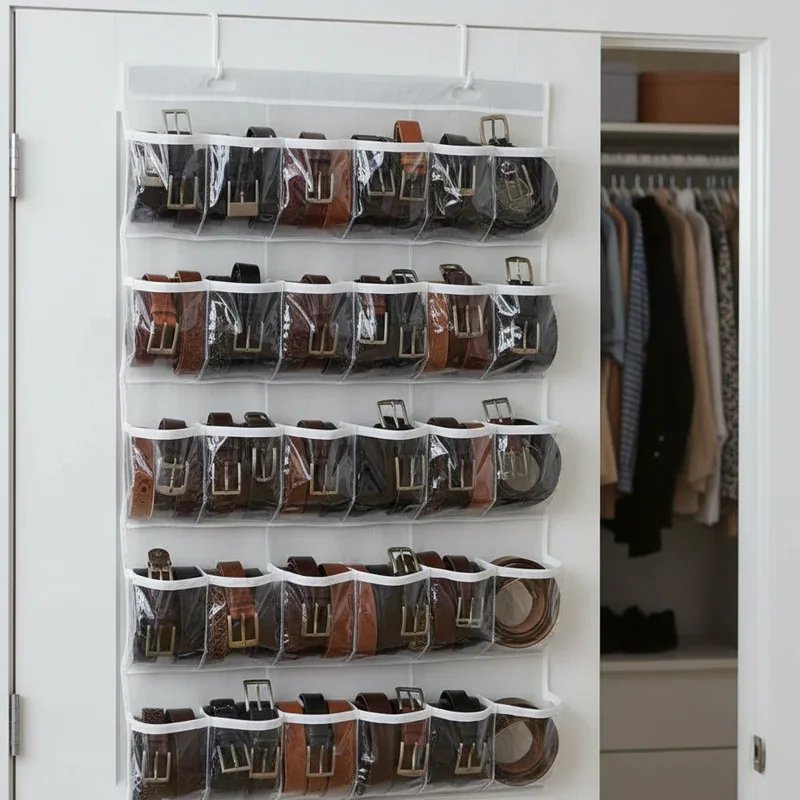
That forgotten space behind your closet or bedroom door just became your new best friend for belt storage! Over-the-door organizers utilize vertical space without requiring any permanent installation, making them perfect for renters or commitment-phobes. These organizers typically feature multiple hooks, loops, or pockets specifically designed to hold belts securely without tangling. The height advantage means you can store dozens of belts in the footprint of a door, organizing them by color, style, or frequency of use. Clear pocket versions let you see everything at a glance, while fabric organizers with individual loops keep leather belts breathing and shape-perfect. Many models include additional storage for ties, scarves, or other accessories, maximizing every inch. The best part? When you move, your entire belt organization system comes with you, no patching holes required.
5. Rotating Belt Carousels
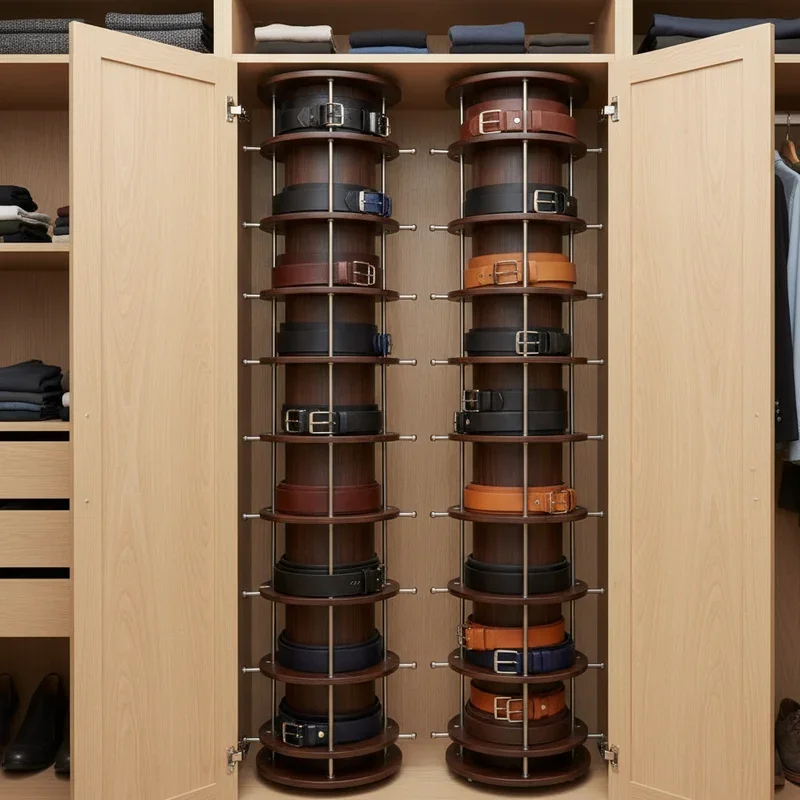
Imagine having your own personal belt boutique that spins at your fingertips! Rotating carousels bring department store efficiency to your closet, displaying belts on a spinning tower that makes selection feel like shopping in your favorite store. These motorized or manual spinners hold multiple belts on individual arms, preventing contact between pieces that could cause scratching or tangling. The 360-degree access means no more digging through piles or untangling knots when you're running late. Place them on closet shelves, dresser tops, or inside cabinets where they transform dead space into organized storage. LED-lit versions add drama while making early morning selections easier. The vertical design minimizes footprint while maximizing capacity, with some models holding up to thirty belts in less than a square foot of space.
6. DIY Pegboard Solutions
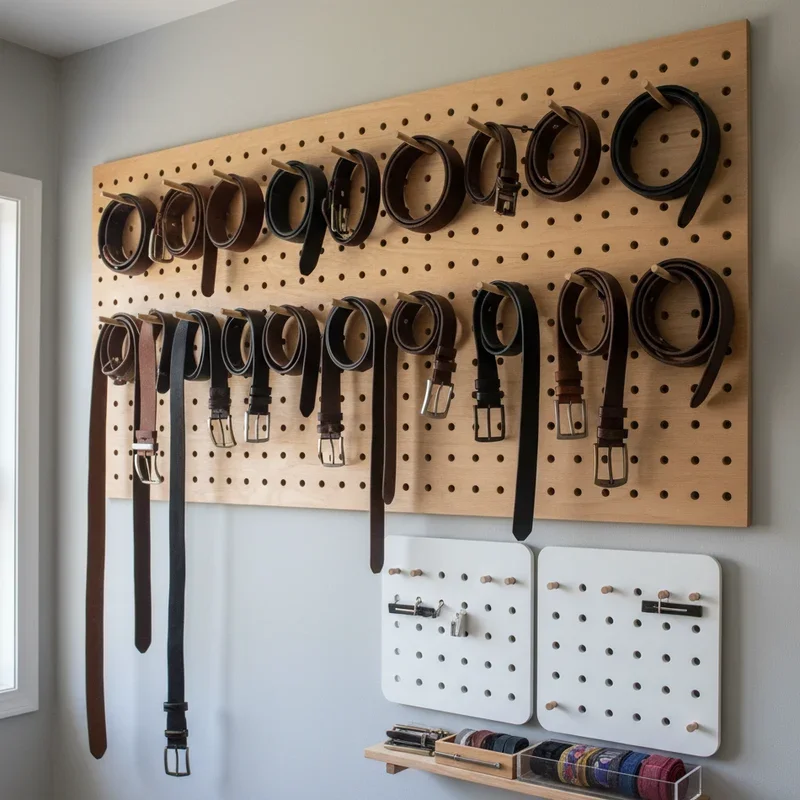
Channel your inner handyperson with a customizable pegboard system that adapts to your changing belt collection like a chameleon changes colors. This budget-friendly option lets you arrange pegs exactly where you need them, accommodating everything from skinny braided belts to thick leather gun belts. Paint the pegboard to match your closet decor or leave it natural for that workshop chic aesthetic that's surprisingly on-trend. Add different peg styles for variety: hooks for quick hanging, loops for rolling, or clips for designer belts you want to display flat. The modular nature means expanding your storage as your collection grows requires just adding more pegs. Include a small shelf above for belt care products like leather conditioner or spare buckles. This solution costs less than a fancy dinner but delivers organization that rivals expensive closet systems.
7. Velvet-Lined Drawer Trays
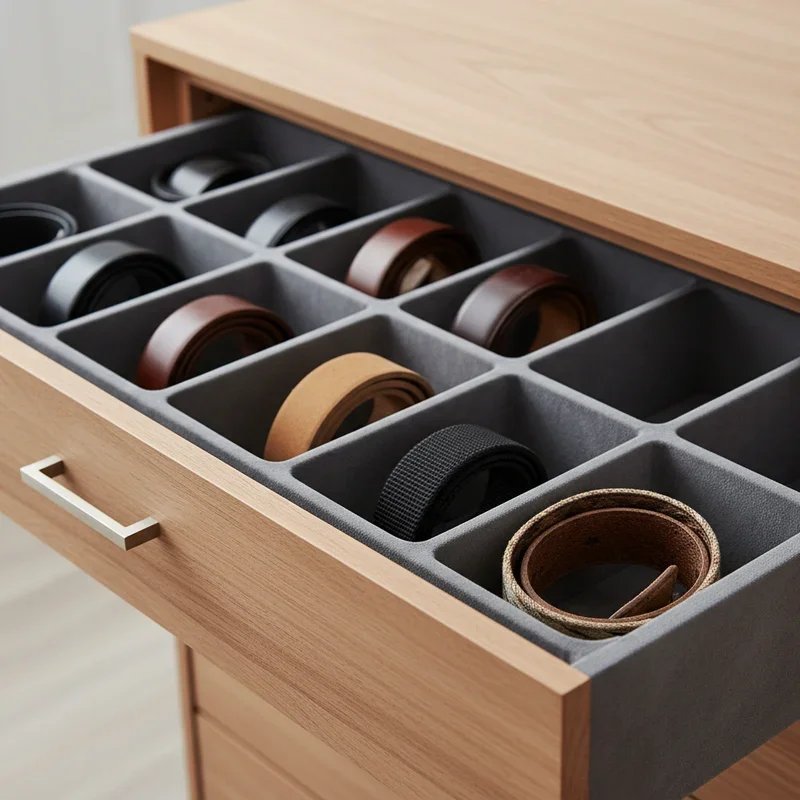
Treat your belts like the treasures they are with velvet-lined drawer trays that whisper luxury every time you open them. These sophisticated organizers protect delicate leather and metal buckles from scratches while adding a jewel box feel to your dresser drawers. The soft lining prevents belts from sliding around when you open and close drawers, keeping everything exactly where you placed it. Compartmentalized designs let you separate belts by category: dress belts here, casual ones there, and that statement piece gets its own special spot. The velvet material naturally grips smooth leather, preventing the annoying slide-and-tangle syndrome that plagues regular drawers. Choose from various colors to coordinate with your bedroom decor or go classic with black velvet for timeless elegance. Some trays stack, allowing you to create multi-level storage in deep drawers.
8. Closet Rod Belt Rings
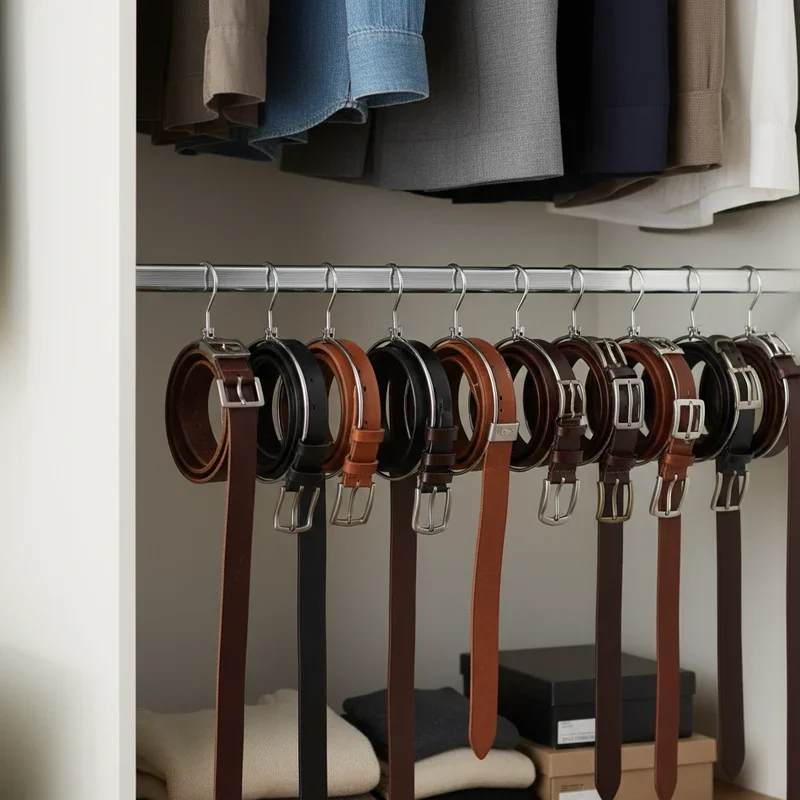
Simple, effective, and practically invisible, closet rod belt rings maximize your existing closet infrastructure without adding bulk. These individual rings clip directly onto your closet rod, each holding one belt in a perfect loop that maintains shape while remaining easily accessible. The genius lies in their flexibility; slide them along the rod to group belts by color or outfit, or spread them out when your collection grows. Metal rings work best for heavy leather belts, while plastic options handle lighter fashion belts without marking. The open design means you can see every belt immediately, eliminating the "I forgot I owned this" syndrome. They're perfect for small closets where every inch counts, as they add zero bulk while keeping belts organized. Mix them with your hanging clothes for coordinated outfit planning.
9. Decorative Wall Hooks
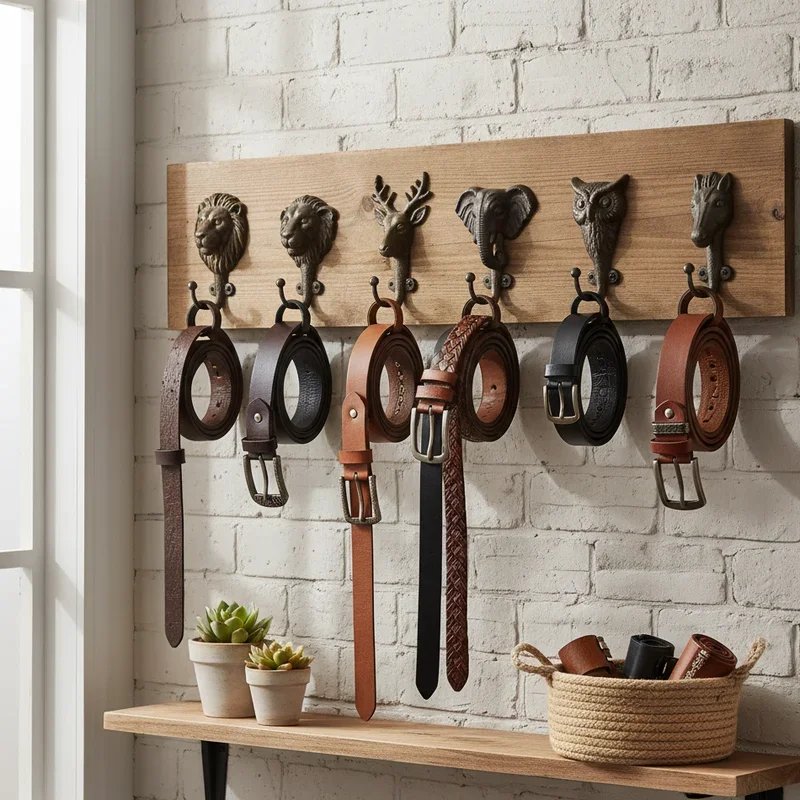
Who says storage can't be stylish? Decorative wall hooks transform belt storage into bedroom art that serves a purpose beyond pretty. Install a row of vintage hooks for rustic charm, geometric modern hooks for contemporary cool, or whimsical animal-shaped hooks that make you smile every morning. The individual hook system lets you display special belts like artwork while keeping everyday options handy. Space hooks according to your belt collection, closer together for a gallery wall effect or spread out for a minimalist vibe. Mix hook sizes to accommodate different belt weights and styles, using sturdy hooks for heavy Western belts and delicate ones for dress belts. This solution works brilliantly in walk-in closets where walls often go unused, or in bedrooms where belts become part of the decor.
10. Pull-Out Belt Drawers
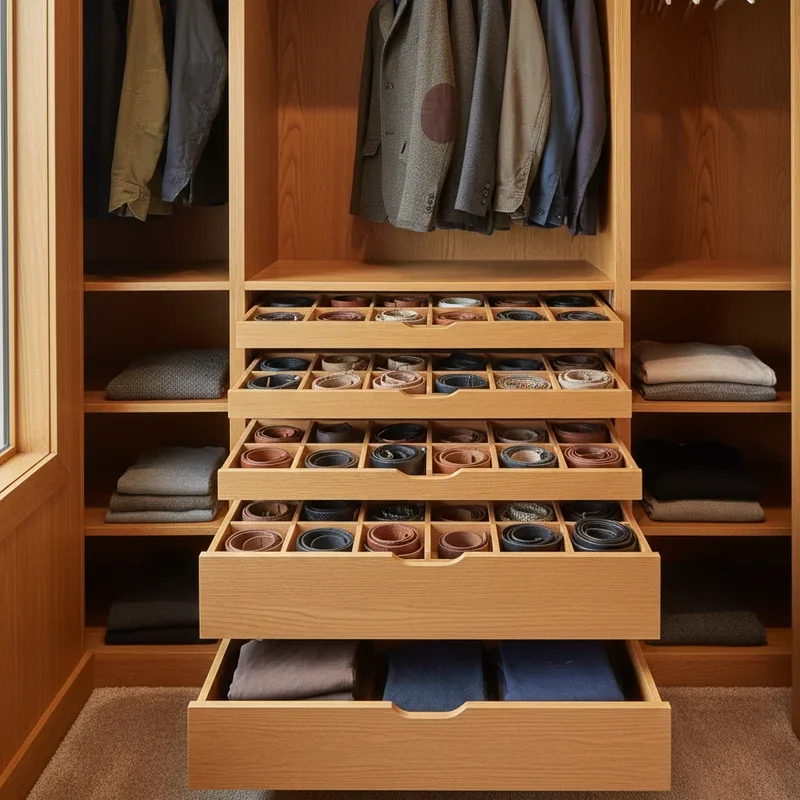
Hidden pull-out drawers designed specifically for belts bring high-end closet functionality to any wardrobe space. These slim drawers slide smoothly on quality rails, revealing organized rows of belts laid flat or in designated slots. The shallow depth prevents belts from getting buried while maximizing the number you can store in minimal space. Install them between hanging clothes sections, under shelves, or in that awkward gap beside your dresser. Felt or fabric lining protects belt surfaces while preventing sliding during drawer movement. Some designs include clear tops or labels, making belt identification possible without opening drawers fully. The concealed storage maintains a clean closet aesthetic while keeping dust and light away from leather belts that could fade or dry out with exposure.
11. Vintage Ladder Display
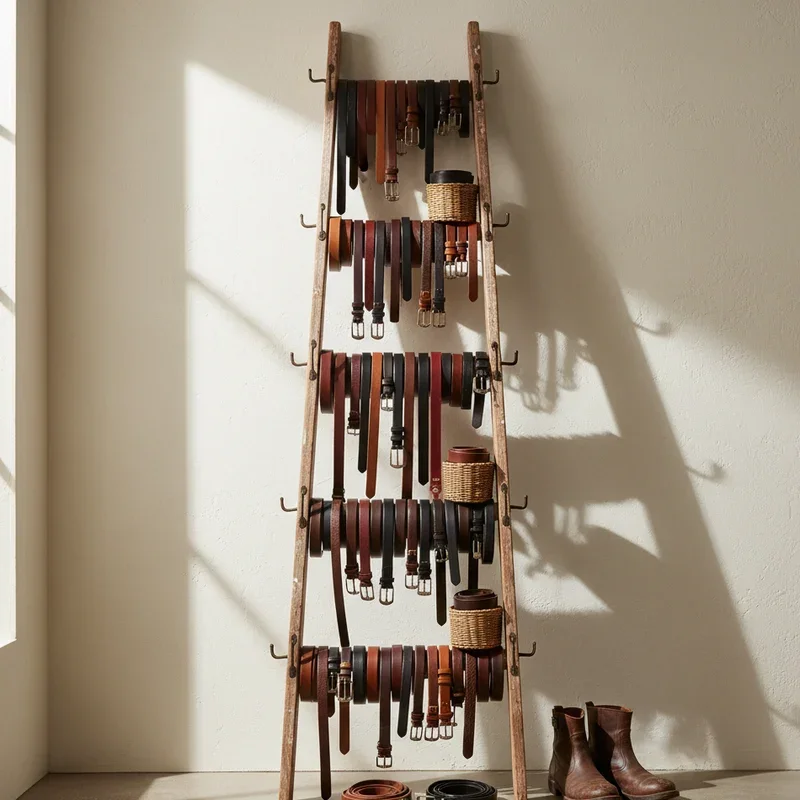
Repurpose an old wooden ladder into a charming belt display that adds character while solving storage dilemmas. Lean it against a wall or mount it horizontally, using rungs as natural dividers for different belt styles or colors. This solution brings farmhouse chic or industrial cool depending on your ladder choice and finishing technique. Sand and stain for rustic appeal, paint for a pop of color, or leave weathered for authentic vintage vibes. Each rung holds multiple belts draped casually, creating an organized yet relaxed storage solution. The vertical orientation maximizes floor space while adding height interest to your room. Smaller stepladders work perfectly in closets, while full-size versions make statement pieces in bedrooms. Add S-hooks to rungs for additional hanging options, mixing belts with scarves or bags for complete accessory storage.
12. Magnetic Strip Storage
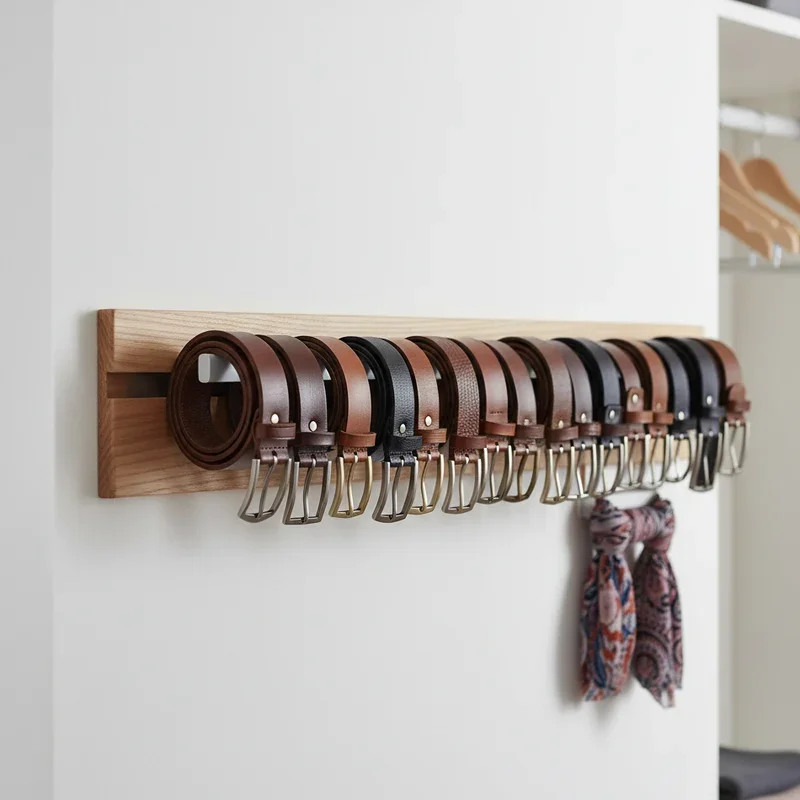
Think outside the box with magnetic strips that turn metal belt buckles into their own hanging system! This innovative solution works brilliantly for belts with substantial metal buckles, creating a floating display that looks like magic. Install strong magnetic strips on closet walls, inside cabinet doors, or behind dressers where they remain hidden yet accessible. The magnetic hold keeps belts secure while allowing instant removal without unhooking or untangling. Arrange belts by color for a rainbow effect or by style for practical organization. This method works particularly well for decorative buckles you want to showcase, turning functional items into artistic displays. The slim profile of magnetic strips means they fit almost anywhere, including narrow spaces between closet sections. Just ensure magnets are strong enough to support your heaviest belts without slipping.
13. Basket and Bin Organization
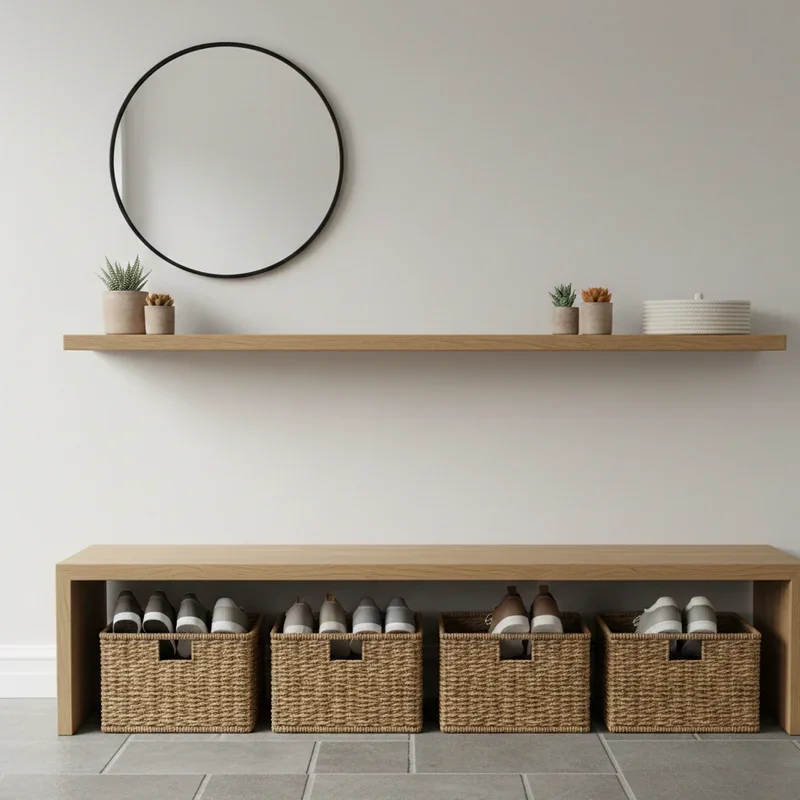
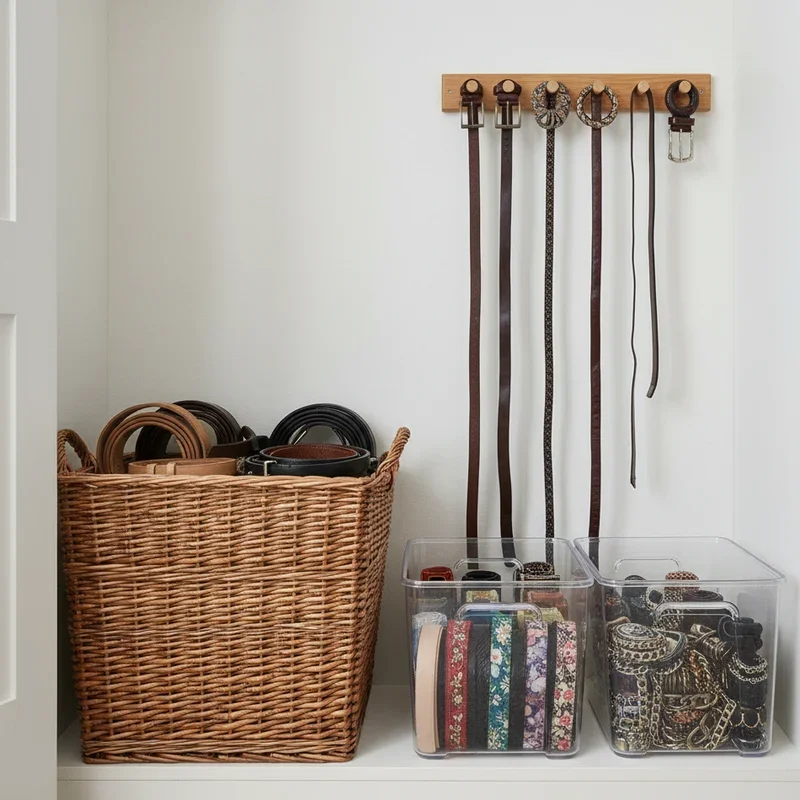
Sometimes the simplest solutions work best, and attractive baskets or bins provide flexible belt storage that adapts to your needs. Roll belts individually and stand them upright in baskets like scrolls in an ancient library, making selection visual and tactile. Choose baskets that complement your decor: woven for natural texture, metal for industrial edge, or fabric for softness. Label baskets by belt type, color, or season for quick identification during rushed mornings. The portable nature means moving belts from closet to bedroom for outfit planning requires no reorganization. Stackable bins maximize vertical space in closets while clear versions maintain visibility. Line baskets with fabric to protect delicate belts and prevent snagging on rough surfaces. This solution scales easily; add more baskets as your collection grows or consolidate when you declutter.
14. Custom Closet Cubbies
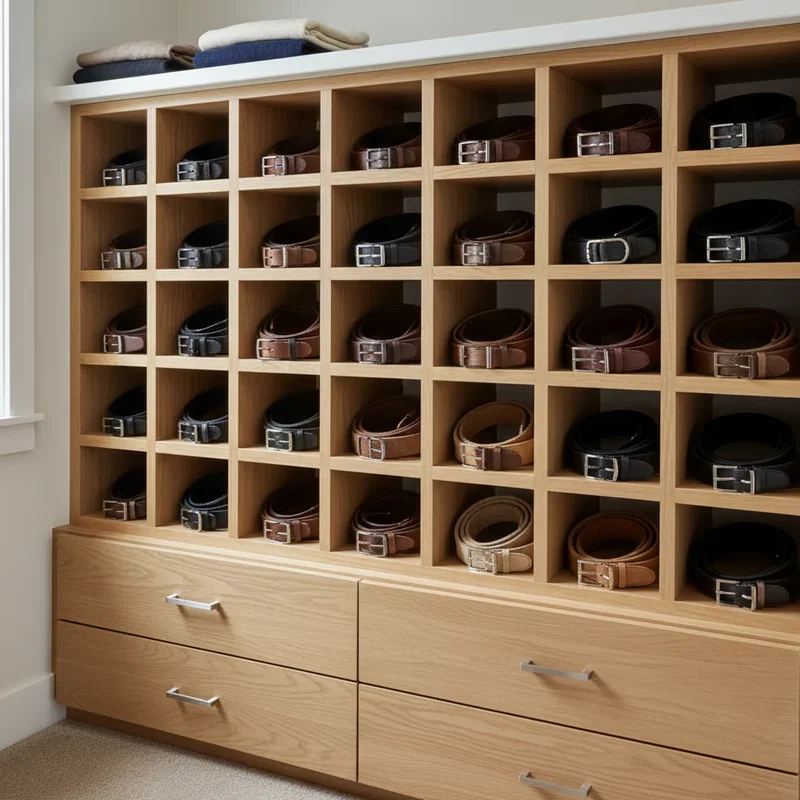
Built-in cubbies designed specifically for belt storage elevate your closet from basic to boutique with minimal effort. These compartments, whether purchased as inserts or custom-built, create designated homes for each belt where they rest without stress or tangling. Design cubbies in various sizes accommodating different belt styles, from skinny chains to wide obi belts. The structured organization makes maintaining order effortless; even the messiest family member can put belts back where they belong. Position cubbies at comfortable heights, considering who uses them most frequently. Include lighting in deeper cubbies to illuminate contents, making selection easier in early morning darkness. The permanent nature adds value to your home while solving storage issues long-term. Paint interiors contrasting colors for visual pop or match your closet for seamless integration.
15. Repurposed Tie Racks
Give forgotten tie racks new life as belt organizers that prove one person's outdated accessory becomes another's storage solution! These racks, whether wall-mounted, motorized, or hanging versions, transition perfectly to belt duty with their multiple arms or bars. Electronic tie racks that rotate become belt carousels offering push-button convenience for reviewing your collection. Wall-mounted versions with extending arms hold belts at various lengths, preventing bunching while maximizing visibility. The spacing designed for ties works ideally for belts, preventing overcrowding while maintaining organization. Many tie racks include lights or mirrors, adding functionality beyond basic storage. Thrift stores overflow with these orphaned organizers at bargain prices, making this an economical solution for budget-conscious organizers. The vintage factor adds character while solving modern storage challenges, proving that everything old becomes new again with creativity.
Conclusion
Belt organization doesn't require a complete closet overhaul or a professional organizer's intervention. These fifteen storage solutions prove that regardless of your space, budget, or belt collection size, there's a perfect system waiting to transform your daily dressing routine. Whether you choose elegant drawer dividers, space-saving wall hooks, or creative DIY solutions, the key lies in selecting methods that match your lifestyle and space. Say goodbye to tangled belt disasters and hello to organized mornings where finding the perfect belt takes seconds, not archaeological excavations.
Read next: 15 Bedding Storage Ideas for a Neat Bedroom
Frequently Asked Questions
Q1: How should I store leather belts to prevent cracking?
Store leather belts flat or gently rolled, away from direct sunlight and heat sources.
Q2: What's the maximum number of belts for one hanger?
Most hangers safely hold 8-10 belts without stretching or damaging the hanger structure.
Q3: Should I store belts with buckles attached or removed?
Keep buckles attached for convenience unless storing long-term in tight spaces causing pressure.
Q4: How do I prevent metal buckles from tarnishing?
Store in dry environments and polish regularly with appropriate metal cleaners for best results.
Q5: What's the best way to organize belts by frequency?
Place everyday belts at eye level and special occasion pieces higher or lower accordingly.
Stay up to date with our latest ideas!