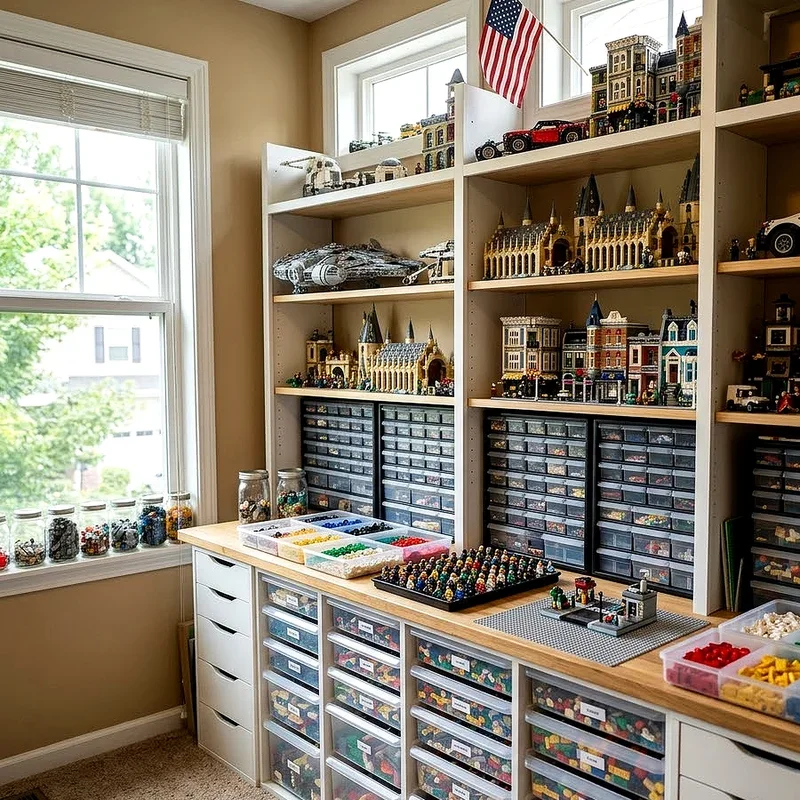
15 LEGO Storage and Display Ideas for Organized Spaces
Transform brick chaos into beautiful order with these 15 clever LEGO storage and display ideas for collectors and families alike.
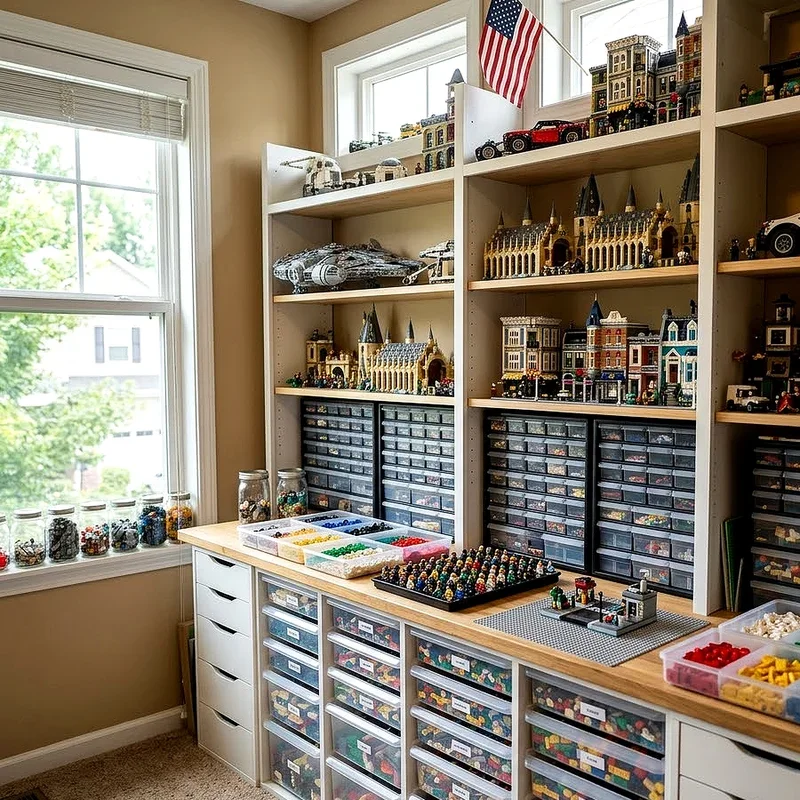
You step on another LEGO brick at midnight, and suddenly you are questioning every life choice that led to this moment. Sound familiar? Those colorful plastic pieces have a magical ability to scatter across every surface in your home like confetti at a parade. But what if I told you that your LEGO collection could become the showpiece of your space rather than the bane of your barefoot existence? Whether you are a serious collector with limited edition sets or a parent drowning in loose bricks, finding the right storage solution transforms chaos into creativity. This guide walks you through fifteen brilliant ways to organize, display, and celebrate your LEGO obsession without sacrificing style or sanity.
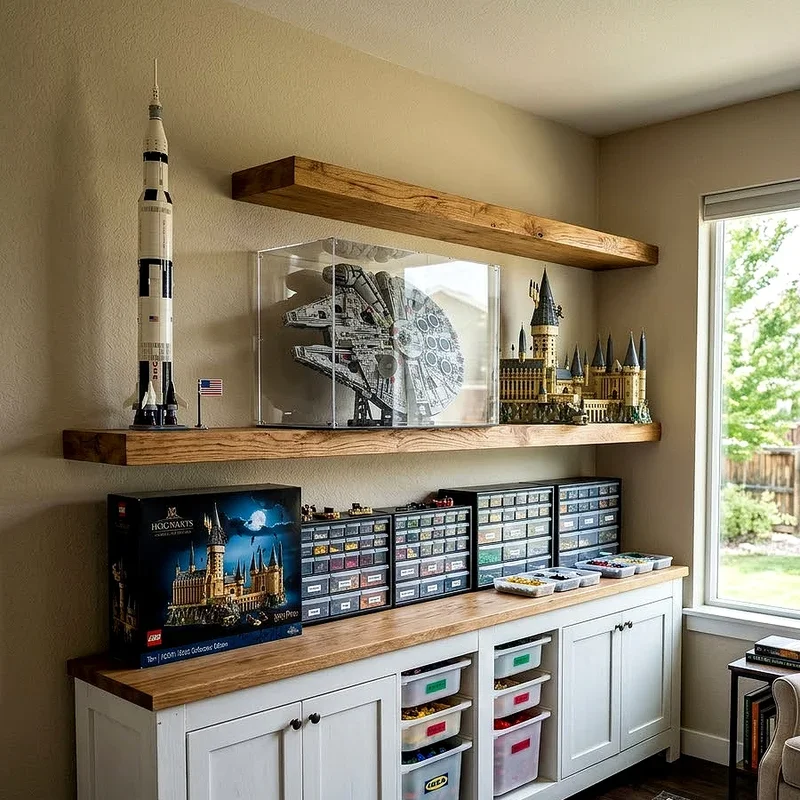
1. Floating Shelves for Stunning Set Displays
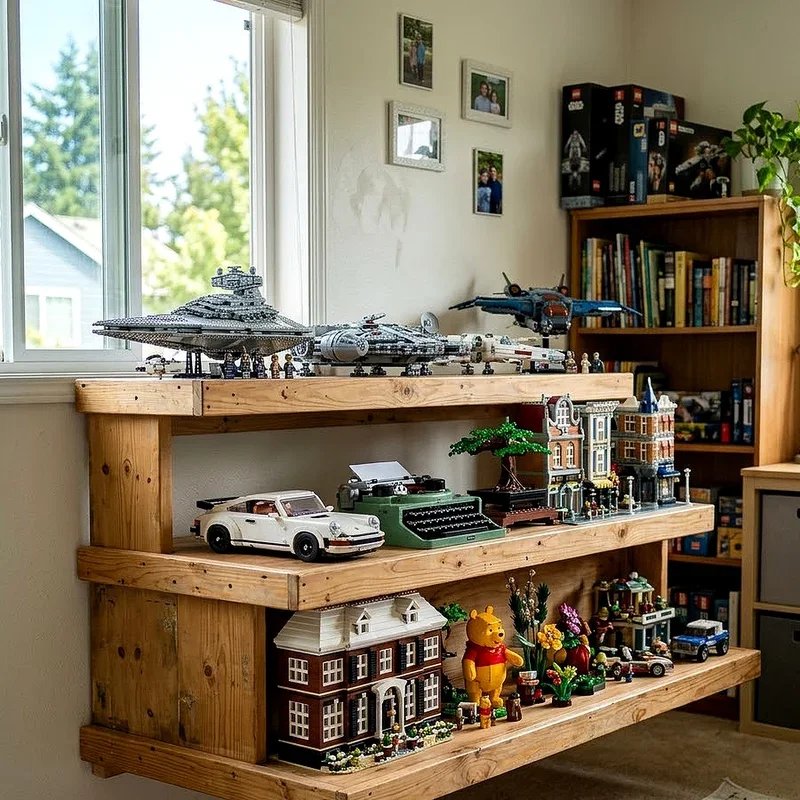
Floating shelves turn your completed LEGO sets into gallery worthy artwork that guests cannot help but admire when visiting your home. Installing these sleek shelves at varying heights creates visual interest while keeping your builds safely out of reach from curious pets and younger siblings who might topple them. You can arrange sets by theme, creating dedicated zones for Star Wars, Harry Potter, or Architecture collections that tell a cohesive story across your entire wall space. The beauty of floating shelves lies in their minimalist aesthetic, allowing the colorful sets themselves to become the focal point rather than competing with bulky furniture pieces. Choose shelves deep enough to accommodate your largest sets, typically around ten to twelve inches, and consider adding small LED strip lights underneath for that professional museum vibe.
2. Clear Drawer Systems for Sorted Bricks
Nothing beats the satisfaction of pulling open a clear drawer and instantly finding the exact brick you need for your current build project. These transparent storage systems eliminate the endless digging through mixed containers that turns a fun building session into a frustrating treasure hunt nobody enjoys. You can organize by color, size, or piece type depending on your building style and personal preference for categorization. Many LEGO enthusiasts swear by sorting standard bricks separately from specialty pieces like wheels, windows, and Technic elements for maximum efficiency. The clear design lets you scan your entire inventory at a glance, making spontaneous creative sessions much more efficient and enjoyable. Stack multiple drawer units vertically to maximize available floor space while keeping thousands of pieces within arm's reach for your next masterpiece creation.
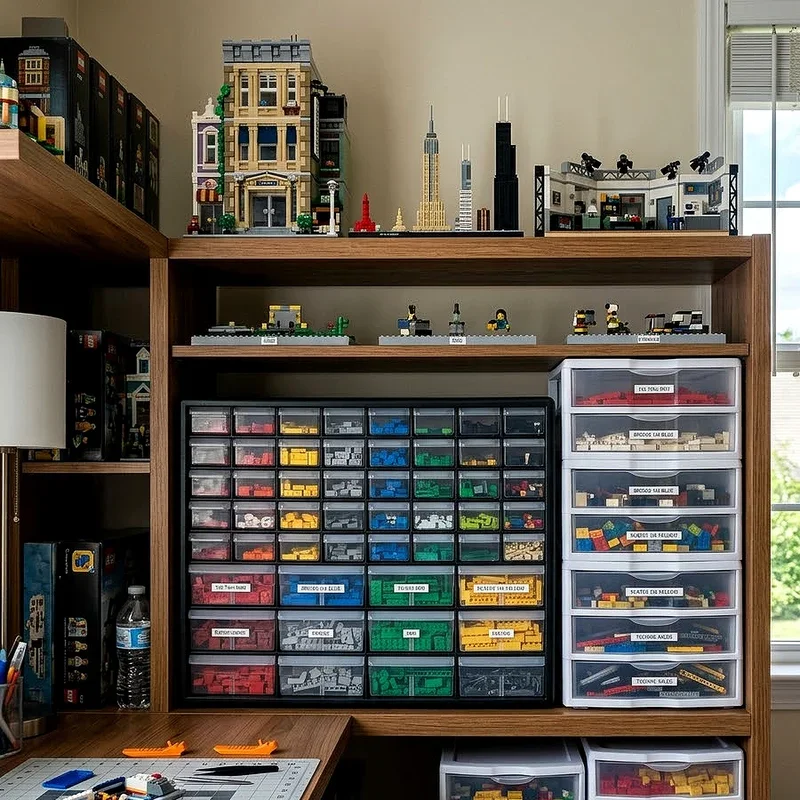
3. Under Bed Rolling Bins for Hidden Storage
Your bed hides incredible storage potential that keeps LEGO collections accessible yet completely invisible to visitors entering your room. Rolling bins slide smoothly beneath the bed frame, transforming wasted space into organized brick heaven without cluttering your living areas or taking up closet space. This solution works particularly well for bulk loose pieces that you use for free building rather than following specific set instructions. Choose bins with secure lids to prevent accidental spills when pulling them out, because nobody wants a brick avalanche cascading across their bedroom floor unexpectedly. The out of sight nature also appeals to parents who want tidy common areas while still encouraging regular creative play sessions. Measure your bed clearance carefully before purchasing, as some frames offer more vertical space than others for accommodating taller storage containers.
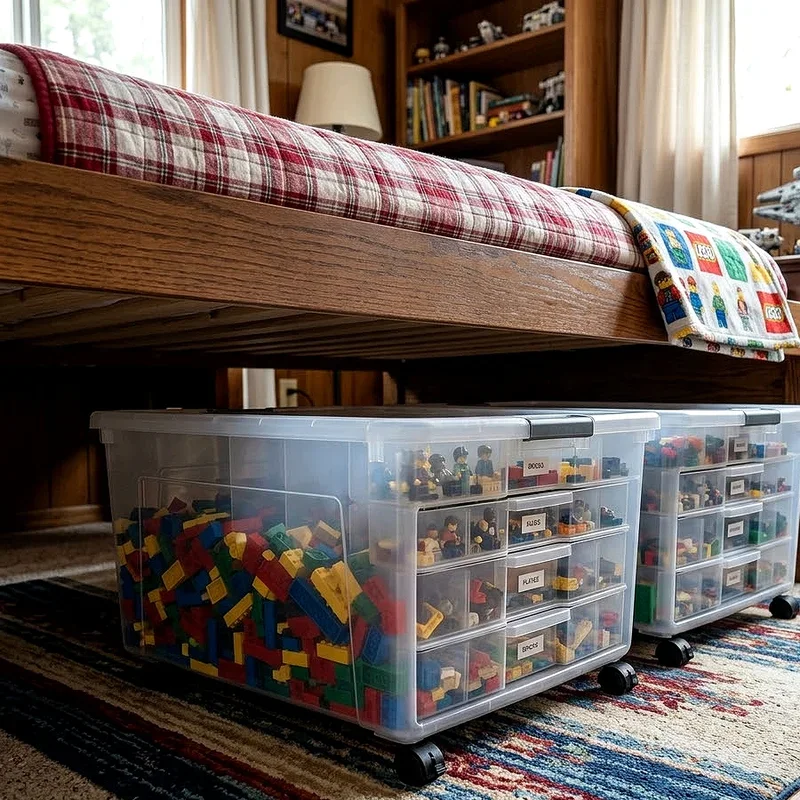
4. Wall Mounted Baseplate Play Stations
Imagine building on vertical surfaces like an architect designing against gravity itself, completely defying the traditional flat table approach most builders use. Wall mounted baseplates create interactive building zones where kids and adults can construct scenes that grow and evolve creatively over time. Mount several plates in a row to create an ever expanding cityscape, underwater world, or space station that becomes stunning living room artwork. The vertical orientation saves valuable floor and table space in smaller homes while keeping builds at eye level for daily appreciation and enjoyment. Some builders use this technique to display work in progress projects without dedicating entire table surfaces to ongoing construction work. Secure the plates with strong adhesive strips or screws depending on your specific wall type and the anticipated weight of completed builds.
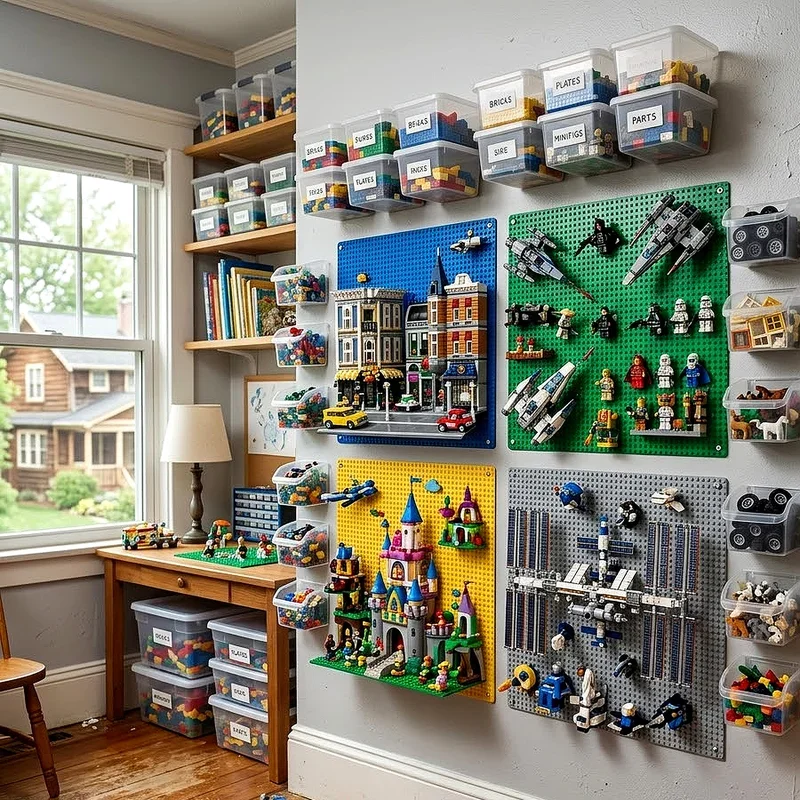
5. Color Coded Containers for Quick Building
Your brain processes color faster than reading labels, making color coded containers the secret weapon for lightning fast brick retrieval during builds. Assign each color family its own distinctively colored container, creating an intuitive rainbow system that even young children can navigate independently. This method works beautifully for households where multiple people build simultaneously and need quick access to shared supplies. The visual organization also makes cleanup remarkably efficient because every brick has an obvious home based on its hue. You can find inexpensive colored bins at dollar stores or invest in uniform sets for a more polished appearance on shelving units. Consider keeping a small mixed container for current projects where you need quick access to multiple colors at once.
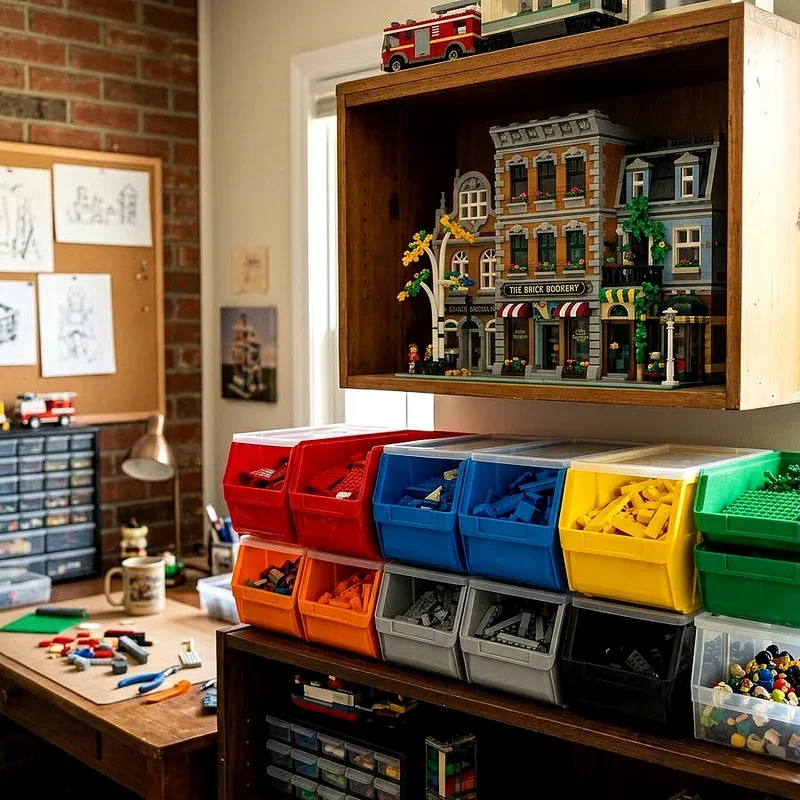
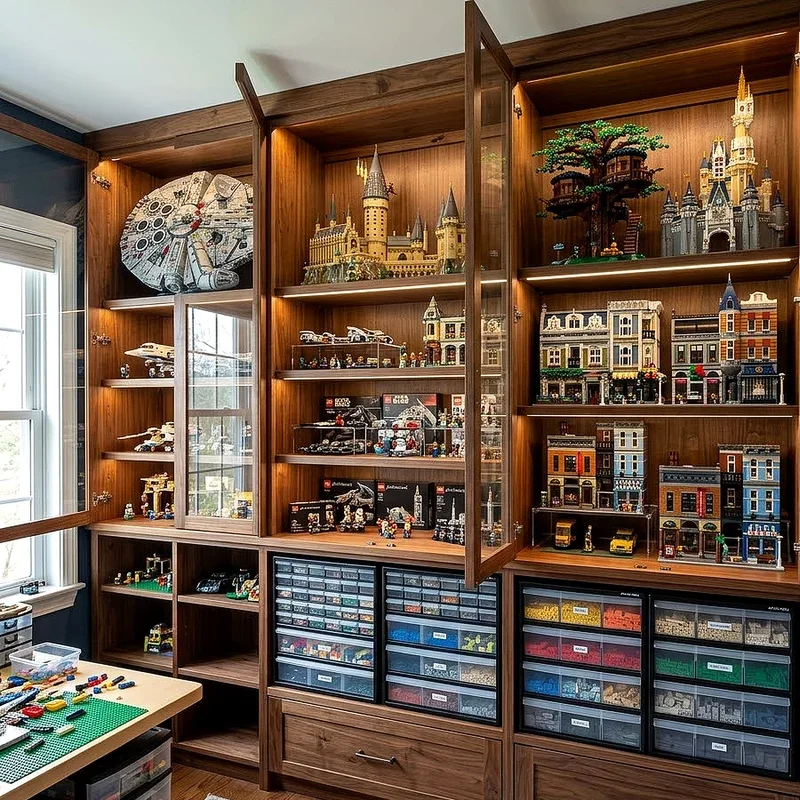
6. Custom Built Display Cabinets
For serious collectors, custom display cabinets offer the ultimate marriage of protection and presentation for valuable sets worth preserving. These enclosed units shield completed builds from dust, sunlight, and accidental bumps that can devastate months of careful construction and thousands of dollars in investment. Glass fronted cabinets with interior lighting transform your collection into a professional looking exhibition worthy of any official LEGO store display. You can commission skilled woodworkers to build cabinets matching your existing furniture or repurpose vintage china hutches for a more eclectic aesthetic appeal. Adjustable shelving inside allows flexibility as your collection grows and changes focus over the years ahead. The investment pays dividends in preservation, especially for retired sets that appreciate significantly in value when kept in pristine display condition for future generations.
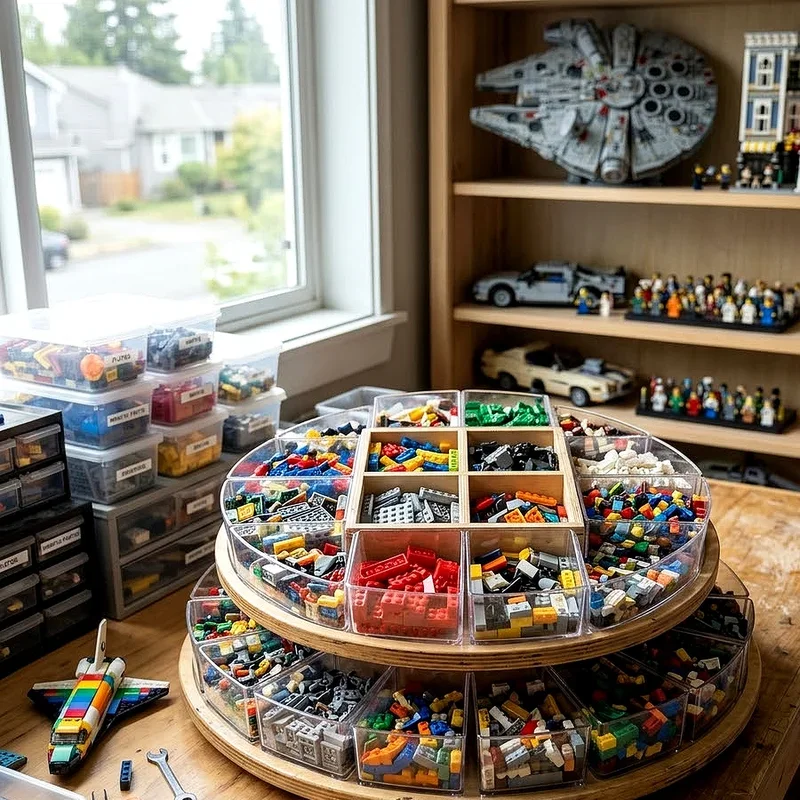
7. Rotating Lazy Susan Organizers
A lazy Susan brings restaurant style convenience to your LEGO workspace, spinning thousands of pieces within easy reach without ever standing up from your chair. Place one on your building table loaded with small containers sorted by piece type, and suddenly construction flows smoothly without constant interruption or searching. This spinning solution proves especially valuable for Technic builders who need quick access to pins, axles, and connectors in various lengths during complex builds. The rotating motion also entertains younger builders who enjoy the playful aspect of spinning around to find their needed pieces quickly. Tiered lazy Susans double your storage capacity in the same footprint, stacking multiple levels of organized bricks efficiently. Position the spinner near your dominant hand for the most ergonomic and comfortable building experience possible during long sessions.
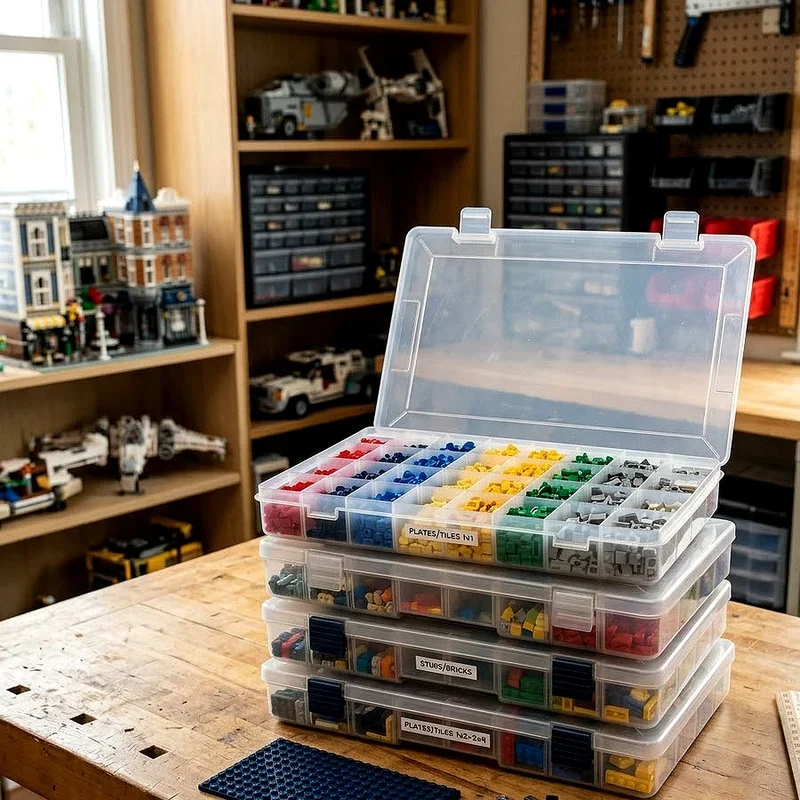
8. Repurposed Tackle Boxes for Small Pieces
Fishermen accidentally created the perfect LEGO storage solution with their compartmentalized tackle boxes originally designed for tiny lures and hooks. These portable containers feature adjustable dividers that accommodate everything from minifigure accessories to the smallest Technic pins with precision organization. The sturdy construction withstands being tossed in backpacks for building sessions at grandma's house or during long road trips without damaging contents. Tackle boxes typically cost significantly less than official LEGO branded storage products while offering superior customization options for your specific needs. The transparent lids let you preview contents without opening, speeding up the search process considerably when hunting for specific elements during builds. Many builders maintain multiple tackle boxes organized by theme or project, grabbing the relevant one for each building session to streamline their creative workflow.
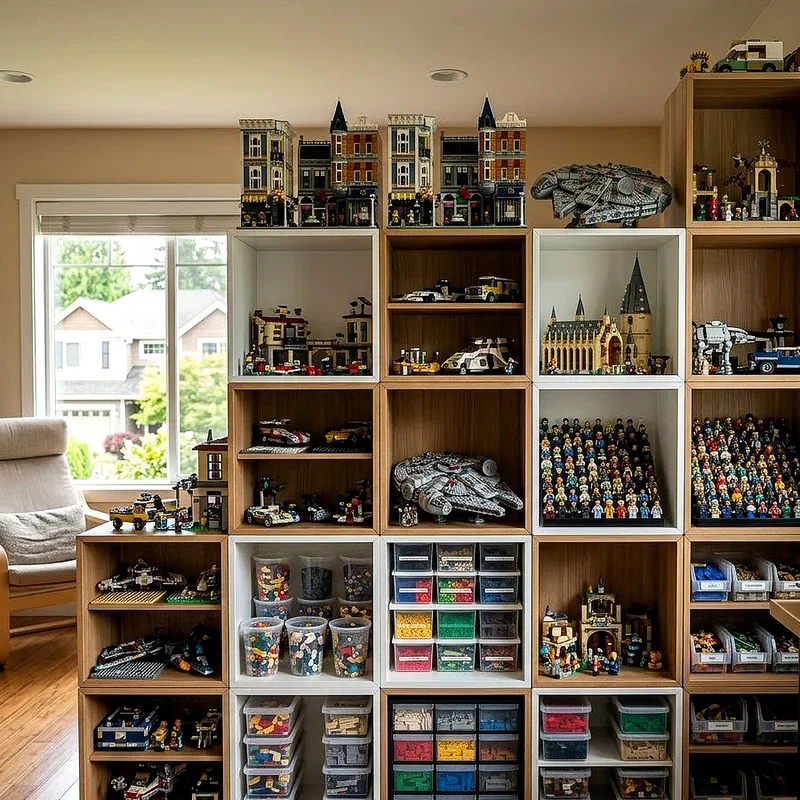
9. Modular Cube Shelving Units
Cube shelving systems like IKEA Kallax have become legendary in the LEGO community for their perfect proportions and endless configuration possibilities for collectors. Each cube accommodates standard storage bins, displayed sets, or pull out drawers depending on your specific organizational needs and preferences. The modular nature means you can start small and expand horizontally or vertically as your collection grows without replacing furniture entirely. Position cubes horizontally for bench seating with hidden storage or stack vertically to create functional room dividers that showcase your builds beautifully. The uniform geometry creates clean sight lines that interior designers appreciate while hiding colorful chaos behind closed bins when needed. Countless accessories exist specifically for these popular units, from fabric inserts to specialized display risers designed to maximize every inch of available space.
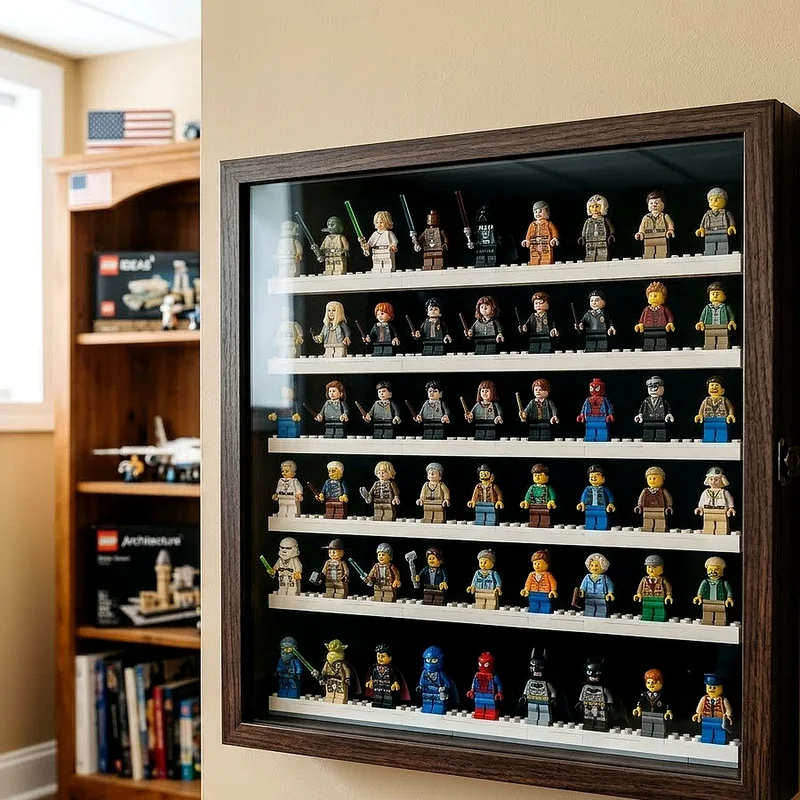
10. Shadow Box Frames for Minifigure Collections
Those tiny plastic people deserve the spotlight, and shadow box frames transform minifigure collections into sophisticated wall art arrangements worthy of admiration. Arrange characters by theme, creating dramatic scenes from favorite movies or imaginative mashups that spark conversation with every visitor who notices them. The depth of shadow boxes provides room for accessories and small builds alongside standing figures for dynamic displays that tell stories. This approach works particularly well for limited space situations where traditional shelving would overwhelm the room visually or feel too cluttered. You can purchase ready made display frames designed specifically for minifigures or create custom arrangements in standard shadow boxes with added risers for depth. The framed presentation elevates the hobby from simple toy collection to curated art display in the eyes of skeptical family members.
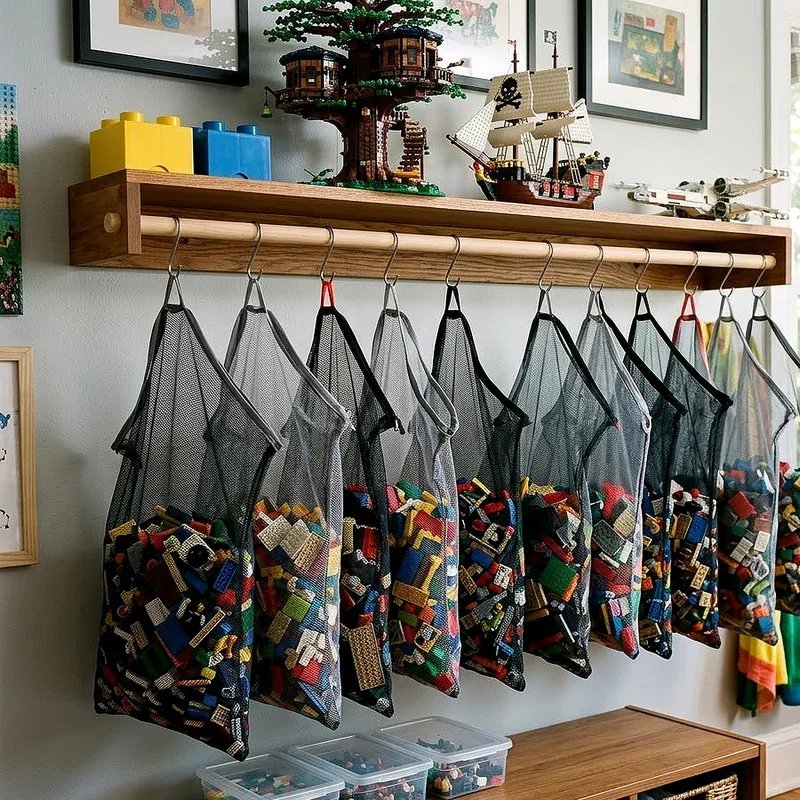
11. Hanging Mesh Storage Bags
When floor and shelf space reaches capacity, your walls and ceiling offer untapped vertical storage through hanging mesh bags designed for lightweight items. These breathable containers keep loose bricks visible and accessible while occupying zero precious floor real estate in cramped rooms or small apartments. Hang multiple bags at staggered heights to create a colorful curtain effect that doubles as playful room decoration and conversation starter. The mesh material allows kids to see contents without dumping everything out during searches, reducing cleanup time significantly after building sessions. This solution suits temporary spaces like rental apartments where drilling permanent shelving feels inappropriate or prohibited by landlords. Children especially enjoy the tactile experience of reaching into hanging bags to select their building materials, making the search process part of the creative fun itself.
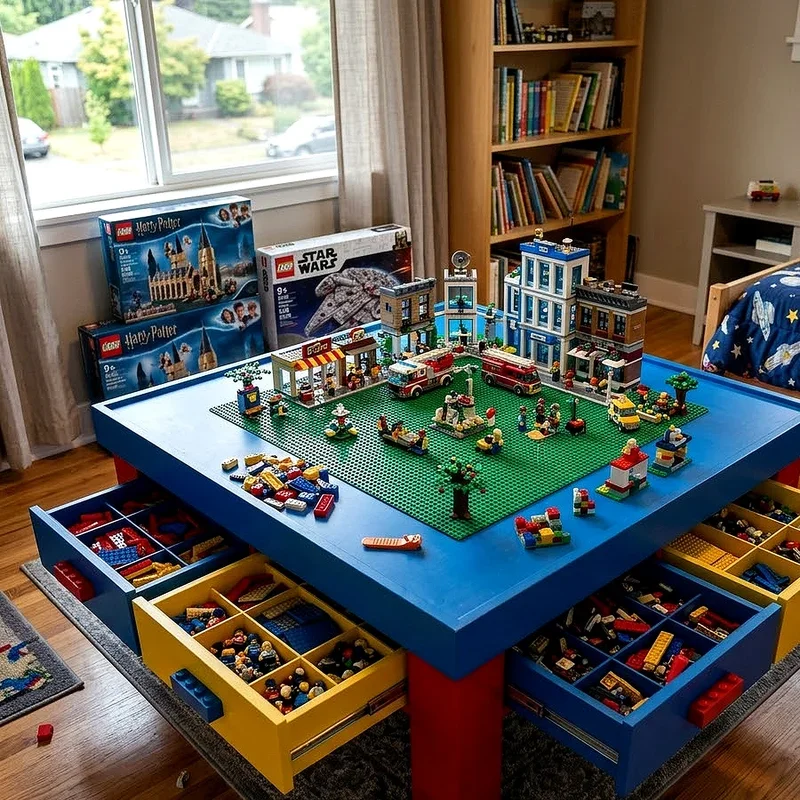
12. LEGO Themed Table with Built In Storage
Purpose built LEGO tables combine playing surface, storage compartments, and display space into one comprehensive furniture piece designed for serious builders. These specialized tables typically feature baseplate compatible tops for immediate construction alongside drawers or bins below for brick storage convenience. The dedicated workspace legitimizes LEGO building as a respected hobby rather than something that constantly takes over the kitchen table during family meals. Some tables include elevated areas for displaying completed sets while construction continues below on the main surface simultaneously. You can purchase commercial options or build custom versions using standard tables modified with added bins and baseplate overlays for personalization. The investment creates a designated building zone that keeps the hobby contained while encouraging regular creative sessions for builders of all ages.
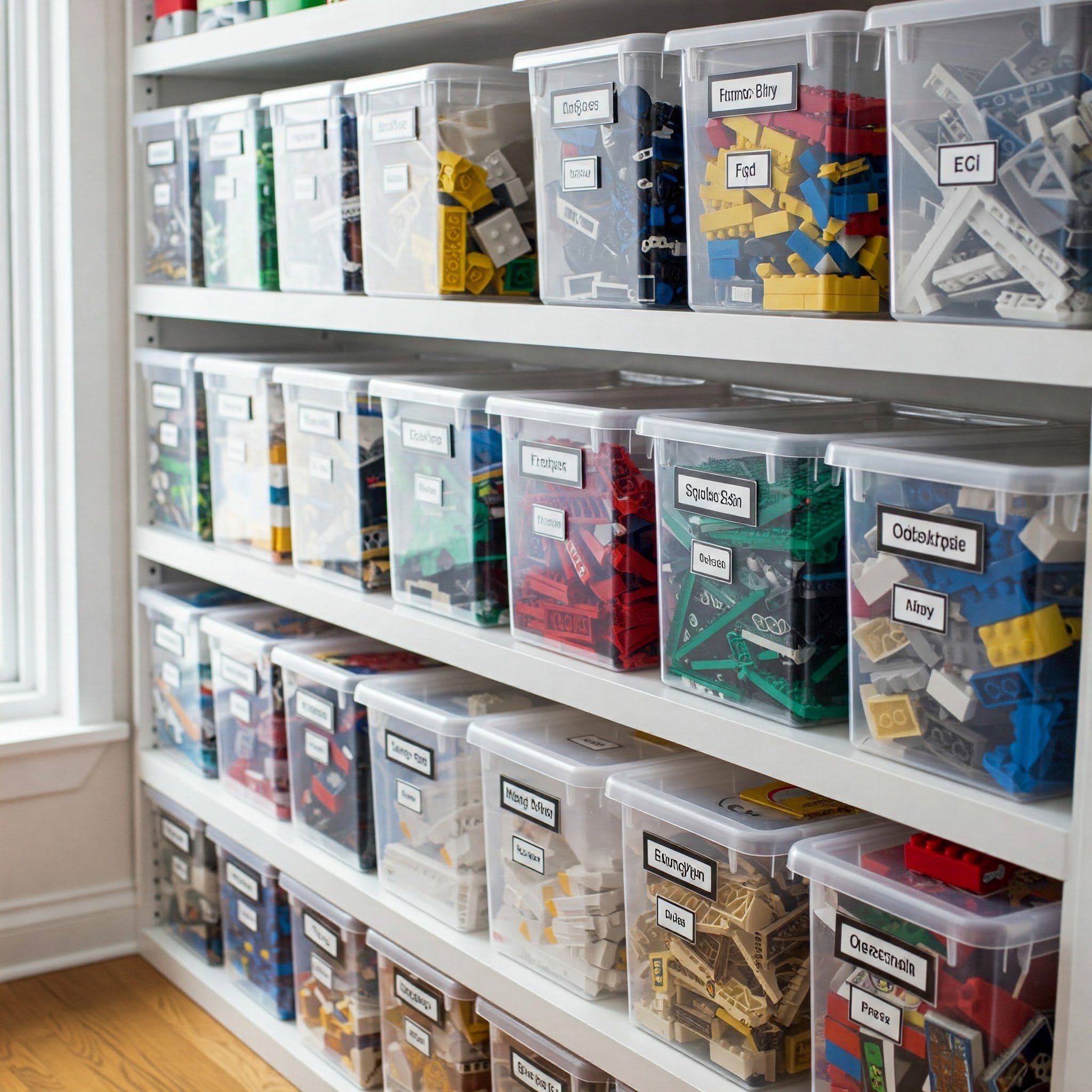
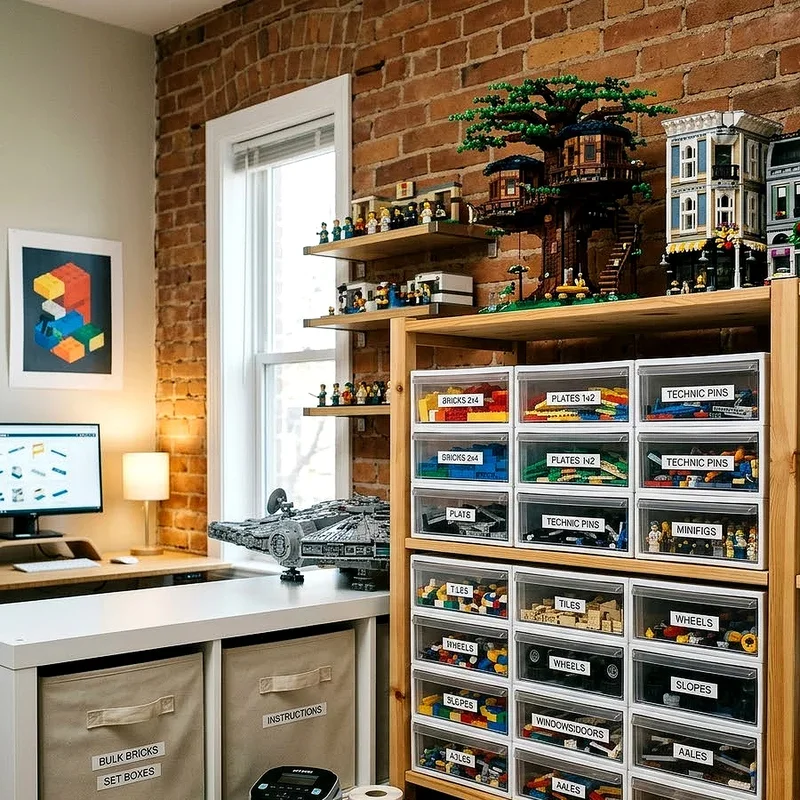
13. Label Maker Organization System
A simple label maker transforms anonymous containers into a perfectly cataloged brick library where every piece has a documented home address. Detailed labels eliminate guesswork about container contents and maintain organization when multiple family members return pieces after building sessions together. You can label by official LEGO part names for serious collectors or use simplified descriptions that children understand easily and can follow independently. The act of labeling itself forces you to develop a logical sorting system that makes sense for your particular collection and individual building habits. Printed labels look more professional than handwritten options and resist fading over time with regular handling during searches. Consider creating a master inventory list alongside your labeling system to track what you own and identify collection gaps worth filling.
14. Magnetic Strip Displays for Metal Base Sets
Certain LEGO collections feature metal elements that open magnetic display possibilities unavailable with standard plastic pieces and traditional shelving. Mount magnetic knife strips or tool holders on walls to create floating displays where sets seemingly defy gravity through invisible magnetic force alone. This unexpected presentation method generates impressive visual impact while keeping displayed items completely secure against accidental bumps from passersby. The approach works particularly well in workshops or offices where industrial magnetic strips already complement the existing aesthetic and decor style. Experimenting with magnet placement creates unique display angles impossible with traditional shelving, adding artistic flair to your collection presentation that visitors remember. Always test magnet strength with your specific sets before permanent mounting to ensure adequate holding power for safety and long term display stability.
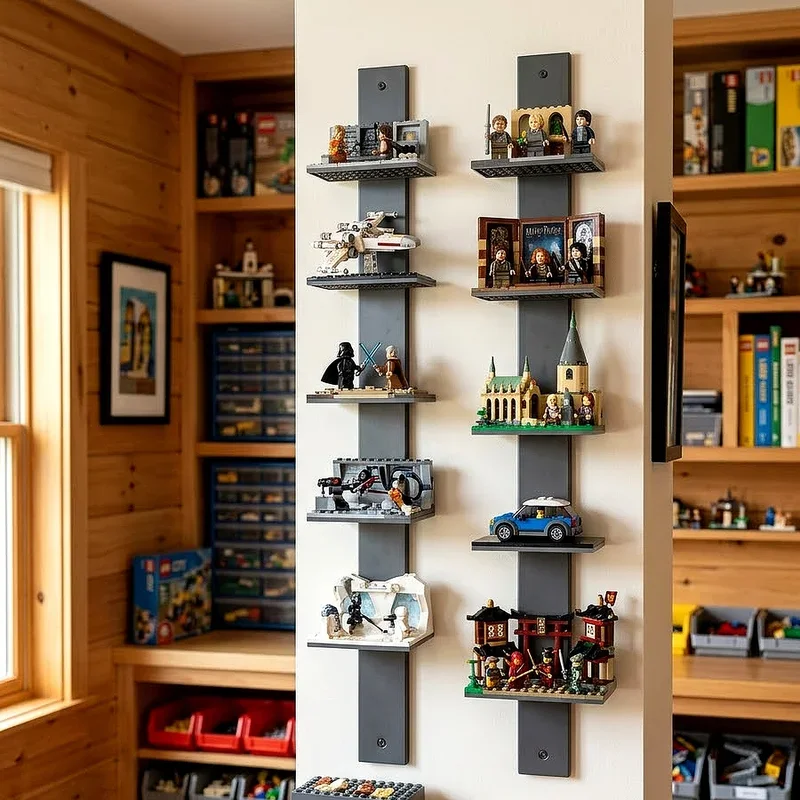
15. DIY Tiered Display Risers
Flat shelves waste vertical display space, but tiered risers create stadium style seating for your LEGO sets where every build remains fully visible to admirers. Construct simple risers from foam board, wood scraps, or acrylic sheets cut to fit your existing shelf dimensions perfectly for seamless integration. The stepped arrangement prevents front row sets from blocking the view of pieces positioned behind them, maximizing visibility for your entire collection. This solution proves especially valuable for minifigure displays where dozens of characters need individual visibility without overcrowding limited shelf space. Painting risers to match shelf backing creates seamless presentation, while clear acrylic maintains attention on the builds themselves without distraction. Adjustable height risers accommodate sets of varying scales within the same display case without requiring custom support structures for each piece.
Conclusion
Transforming your LEGO collection from scattered chaos into organized beauty requires choosing storage solutions that match your space, habits, and display goals. Whether you prefer hidden storage that keeps living areas clutter free or museum style displays that celebrate every set, these fifteen ideas offer something for every collector. The perfect organization system encourages more building by eliminating frustrating brick hunts while protecting your investments. Start with one approach that addresses your biggest challenge, then expand as you discover what works best. Your feet will thank you for finally getting those bricks off the floor.
Read next: 15 Lego Storage Ideas for a Tidy Playroom
Frequently Asked Questions
Q1. What is the best way to sort LEGO bricks for efficient building?
A: Sort by piece type rather than color for faster building and easier part location.
Q2. How do I protect displayed LEGO sets from dust accumulation over time?
A: Use enclosed display cases with glass doors or cover open shelves with acrylic panels.
Q3. Are official LEGO storage products worth the higher price compared to alternatives?
A: Generic containers work equally well and cost significantly less than branded LEGO options.
Q4. What storage solution works best for households with young children?
A: Large open bins with color sorting allow easy access and simple cleanup for kids.
Q5. How much space should I plan for a growing LEGO collection?
A: Collections typically triple within two years, so plan storage with significant expansion room.
Stay up to date with our latest ideas!