Discover 15 receiver hitch storage ideas for organized garages that keep heavy accessories safe, accessible, and off the floor.
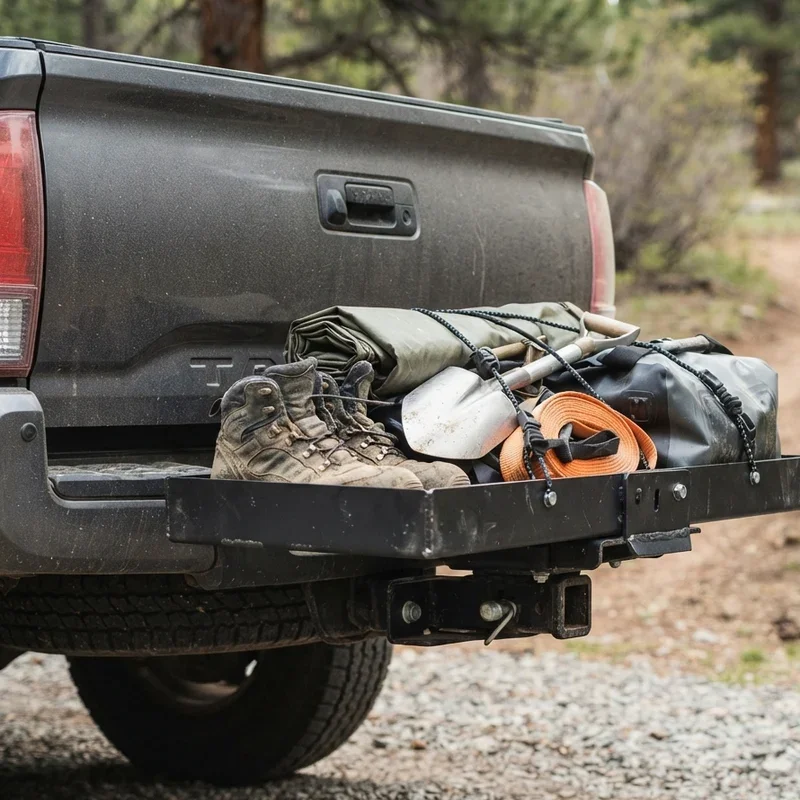
A receiver hitch storage solution rescues your heavy towing accessories from the dangerous garage floor positions where ball mounts, bike racks, cargo carriers, and pin hitches scatter across walkways creating tripping hazards, rust-promoting ground contact, and the frustrating search-and-locate missions that poorly stored heavy metal equipment demands every single time you need to connect a specific hitch accessory to your vehicle before departing for a towing job or recreational adventure requiring trailer attachment. Have you ever stubbed your toe on a heavy ball mount hiding behind a tire in your garage and wondered why something weighing twenty pounds has no designated storage position preventing it from ambushing your bare feet in the dark during late-night garage passages? That painful encounter disappears permanently when dedicated storage gives every hitch component a visible, elevated, organized home within your garage. Think of hitch storage as building a parking garage specifically for your towing equipment. These fifteen ideas construct that parking garage perfectly.
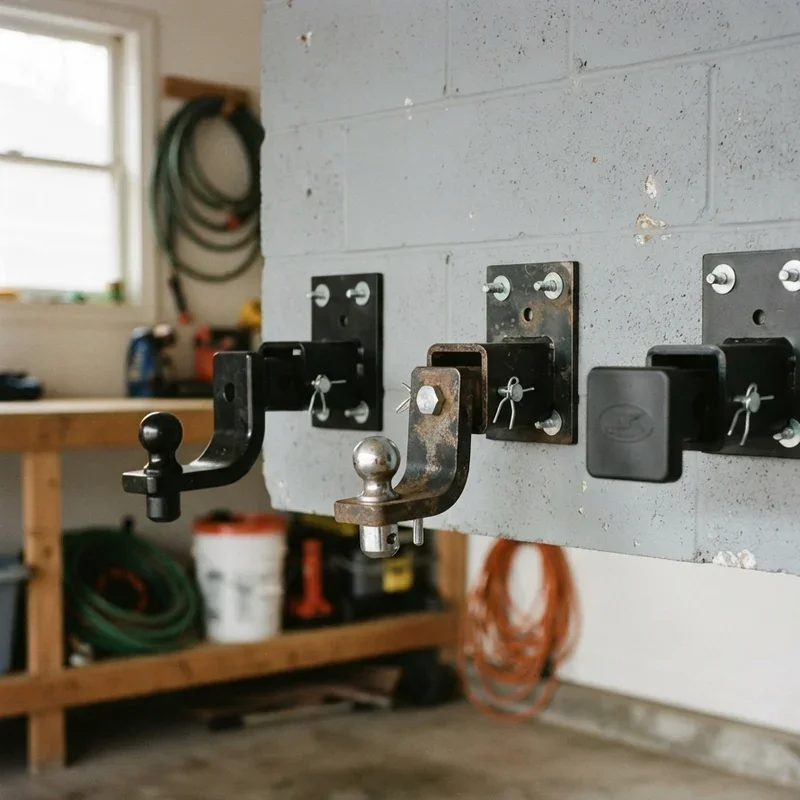
1. Wall-Mounted Hitch Receiver Bracket
A wall-mounted hitch receiver bracket bolts a short section of receiver tube directly to the garage wall stud creating a permanent docking station where ball mounts, bike rack stems, and cargo carrier shanks slide into the wall-mounted receiver exactly as they insert into the vehicle's actual hitch, the familiar insertion method providing secure, organized storage using the same connection mechanism every hitch accessory already fits naturally without requiring any additional adapters or unfamiliar mounting hardware. Wall receiver brackets work like installing a spare trailer hitch on your garage wall where accessories park themselves using the connection they already know. Mount receiver tube sections into wall studs using heavy-duty lag bolts supporting the considerable accessory weight. Install at comfortable lifting height reducing strain during heavy equipment insertion.
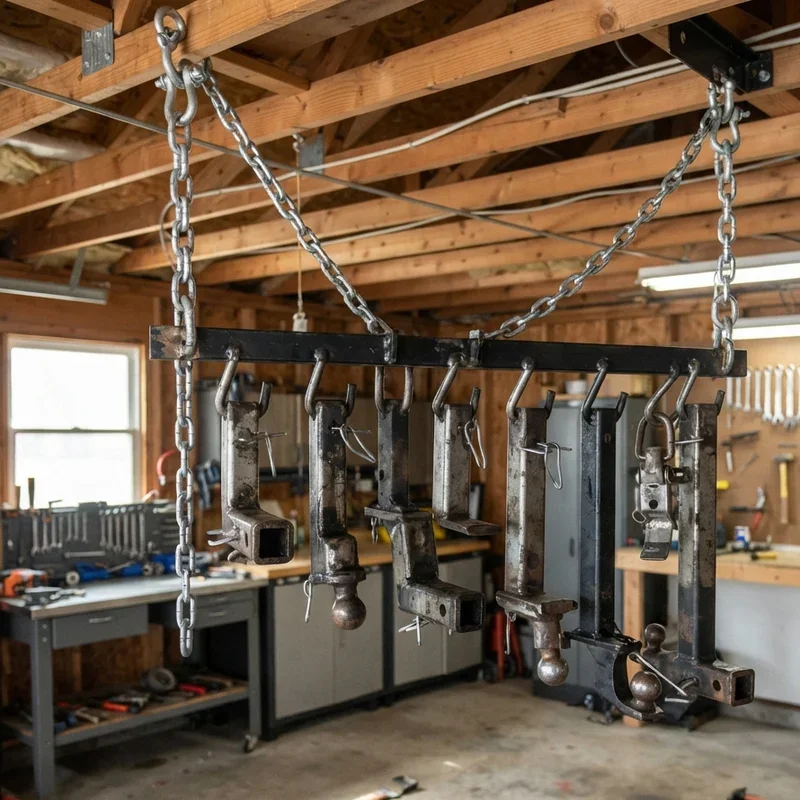
2. Ceiling-Hung Chain Hitch Hanger
A ceiling-hung chain hitch hanger suspends heavy hitch accessories from overhead chains or cables attached to garage ceiling joists, the elevated hanging position keeping bulky equipment completely off the floor and out of walkway interference while the chain length allows adjustable hanging height positioning accommodating different accessory sizes within the vertical space between ceiling structure and comfortable reaching height from standing position below. Chain hangers work like hanging your heaviest garage equipment from the ceiling where gravity keeps everything securely suspended above the floor permanently. Install heavy-duty eye hooks into ceiling joists rated for the suspended equipment weight. Use thick chain providing adequate strength for heavy ball mount and carrier loads.
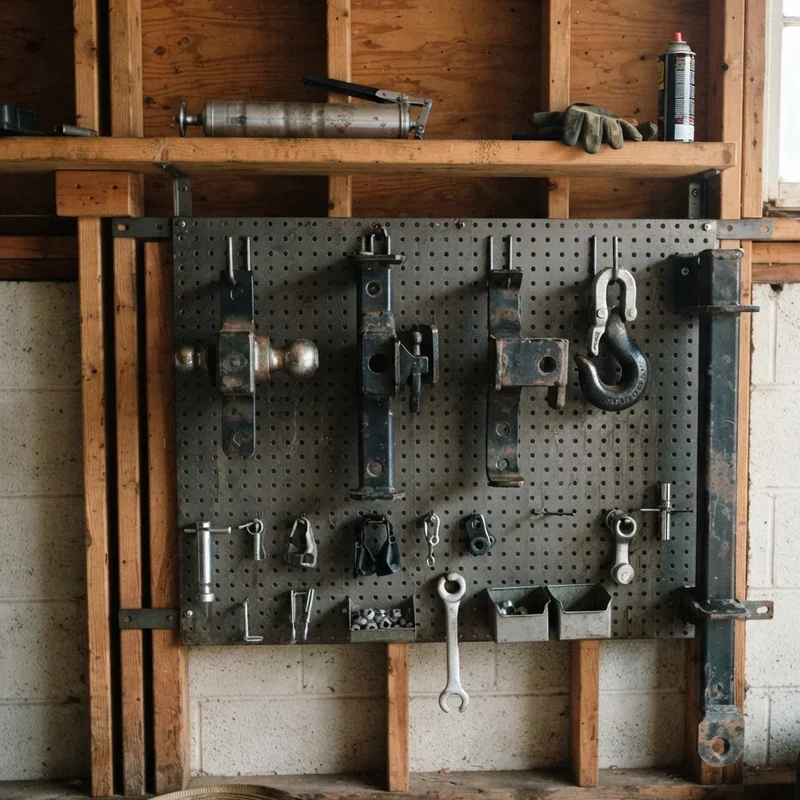
3. Pegboard Heavy-Duty Hitch Station
A pegboard heavy-duty hitch station mounts a reinforced perforated panel using industrial-strength hooks sized for heavy metal hitch accessories, the customizable wall system holding ball mounts, hitch pins, locking clips, and light-duty accessories in a visible, adjustable arrangement that adapts whenever your towing equipment collection changes or preferred organizational layout evolves between different vehicle and trailer configurations throughout seasonal recreational use cycles. Heavy-duty pegboard works like building an adjustable hitch hardware store on your garage wall where every hook repositions without new mounting holes. Install reinforced pegboard or metal peg panels rated for heavy equipment weight. Select industrial-grade hooks preventing bending under the considerable weight of steel hitch components.
4. Floor-Standing Hitch Rack Tower
A floor-standing hitch rack tower positions a vertical metal frame with multiple horizontal arms holding several ball mounts, receiver shanks, and accessories at varying heights within one compact standing unit that organizes the entire hitch collection vertically rather than spreading heavy metal equipment across the garage floor where scattered pieces create hazardous obstacle courses between parked vehicles and garage workbench destinations. Floor-standing racks work like building a tiny apartment tower for your hitch equipment where every heavy accessory occupies its own designated floor within the vertical structure. Select commercial hitch racks or weld custom stands using heavy-gauge steel tubing supporting multiple loaded accessory positions simultaneously. Position against the garage wall preventing accidental tipping.
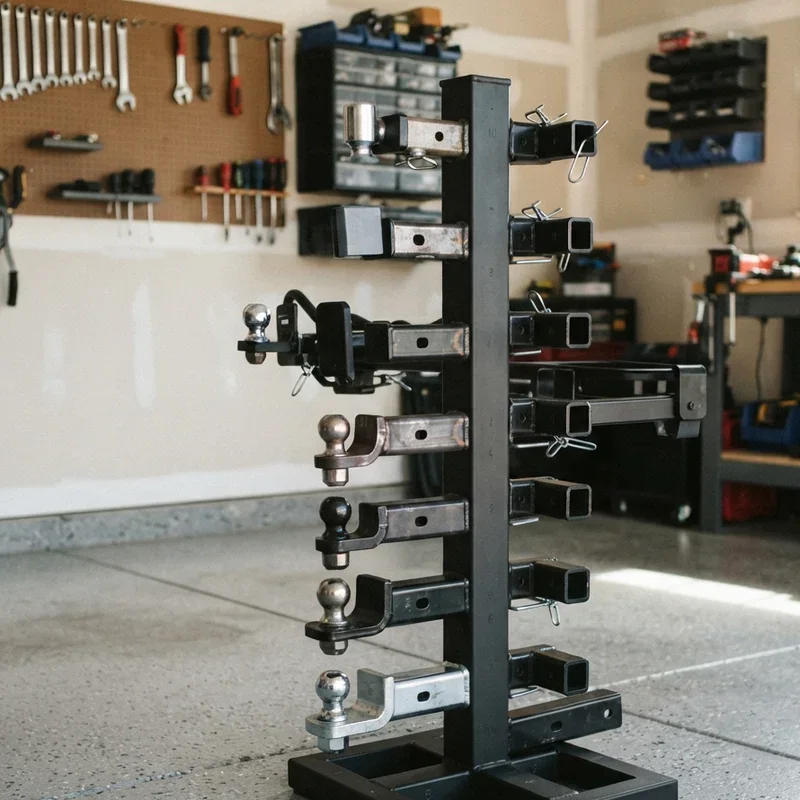
5. Magnetic Tool Strip Hitch Pin Holder
A magnetic tool strip mounted to the garage wall holds small hitch accessories including pins, clips, locking mechanisms, and cotter keys using powerful neodymium magnets that keep every small metal component visible and individually retrievable without rummaging through junk drawers or searching beneath workbenches where loose hitch hardware inevitably migrates and disappears between towing sessions demanding their urgent relocation before departure. Magnetic hitch pin holders work like giving your smallest towing hardware a gravity wall where every pin and clip sticks exactly where you placed it last. Install heavy-duty magnetic strips at eye level near the primary hitch storage area. Organize small components by type along the magnetic strip length.
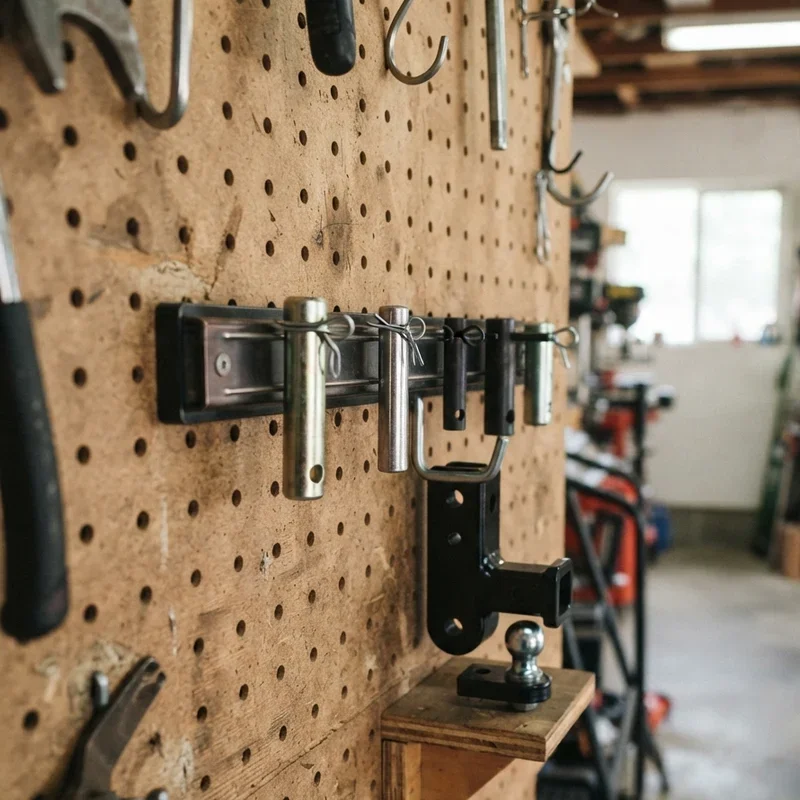
6. Lumber Rack Adapted Hitch Storage
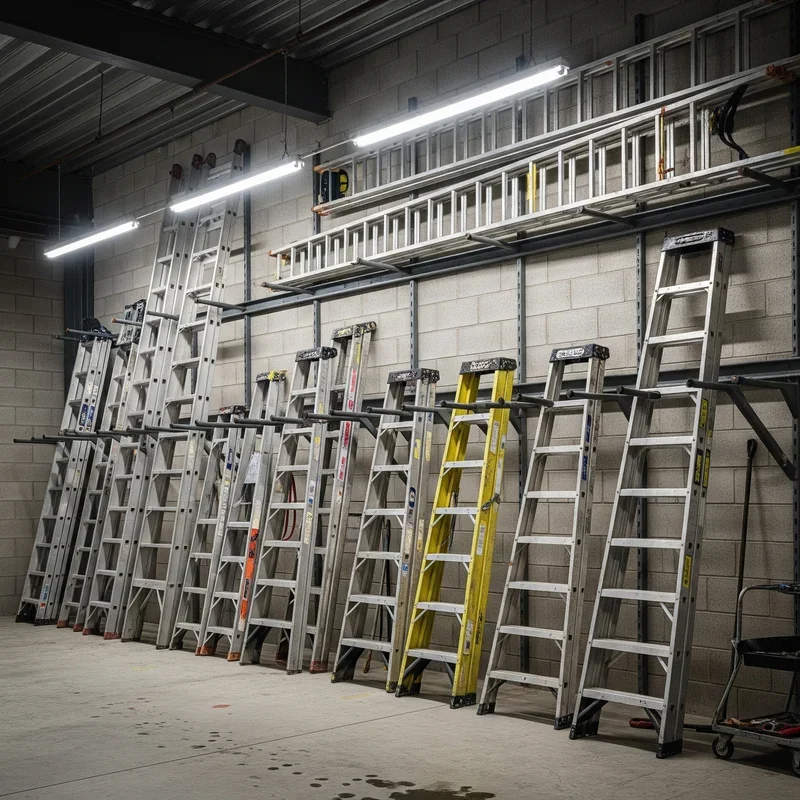
A lumber rack adapted for hitch storage repurposes horizontal wall-mounted lumber support arms as heavy-duty hitch accessory holders where ball mounts, cargo carriers, and receiver-mounted accessories rest across the padded arms originally designed for holding dimensional lumber and pipe inventory within garage workshop environments already equipped with the weight-rated mounting infrastructure heavy hitch accessories demand from their supporting storage hardware. Lumber rack hitch storage works like borrowing your workshop's strongest arms and reassigning them to towing equipment holding duty where industrial-rated support handles the heaviest accessories. Mount heavy-duty lumber rack arms into wall studs at comfortable loading and unloading height. Add rubber padding protecting hitch accessory finishes from metal-on-metal contact scratching.
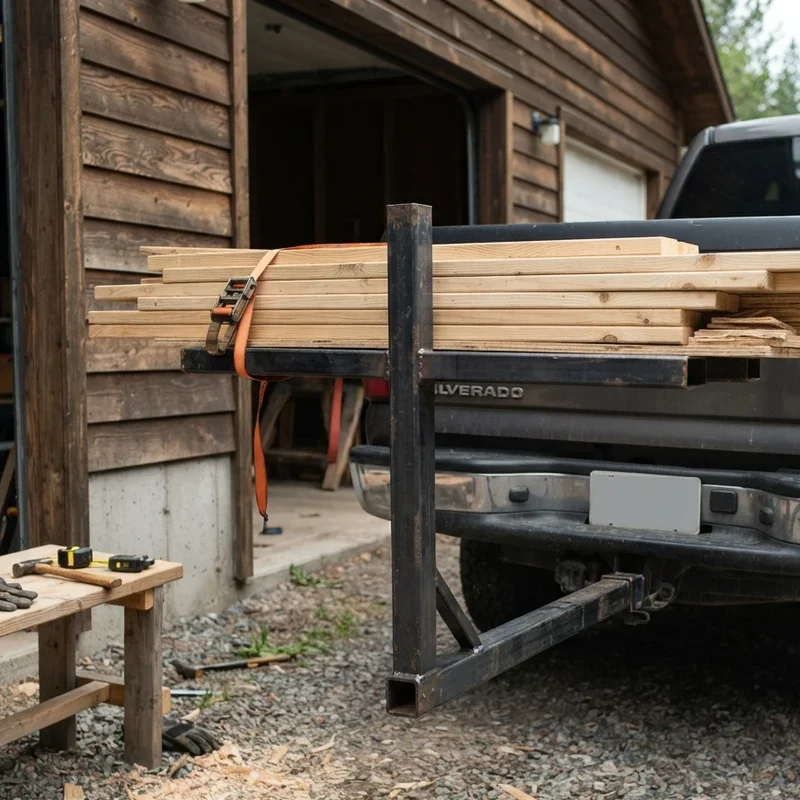
7. PVC Pipe Hitch Tube Organizer
PVC pipe sections mounted vertically to the garage wall create individual storage tubes where ball mount shanks slide downward into the standing pipe compartments, each tube holding one hitch accessory upright in its own dedicated vertical sleeve preventing the tangled pile-up that unsorted hitch components create when stored together in shared containers where heavy metal pieces scratch, dent, and damage each other through constant uncontrolled contact during retrieval attempts. PVC tube organizers work like building individual parking stalls for each hitch accessory where every shank slides into its own standing garage. Mount large-diameter PVC pipe sections vertically to wall surfaces using pipe clamps and lag bolts. Size pipe diameter to fit standard hitch shank dimensions.
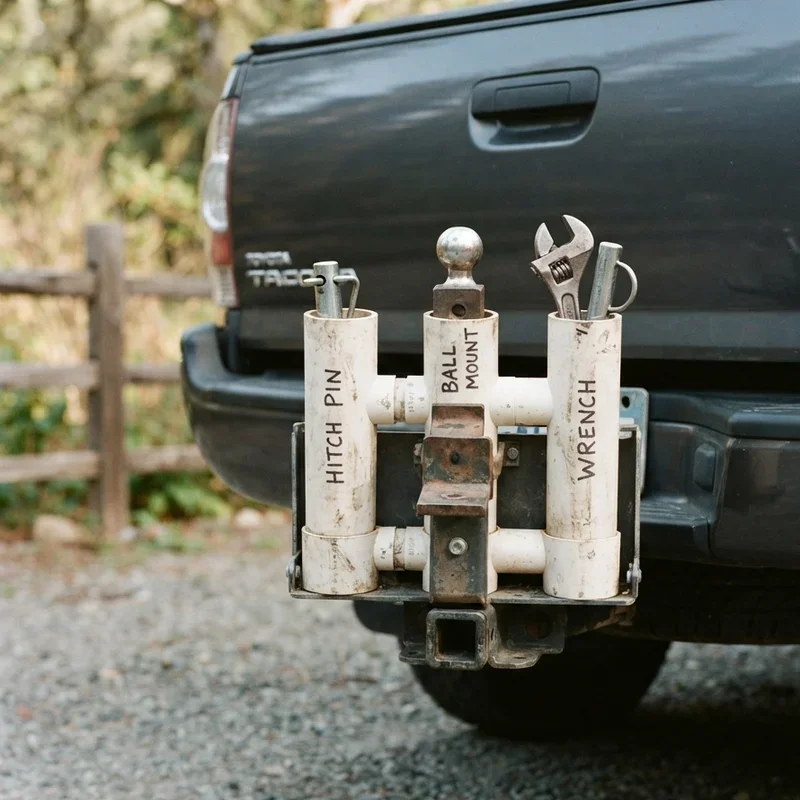
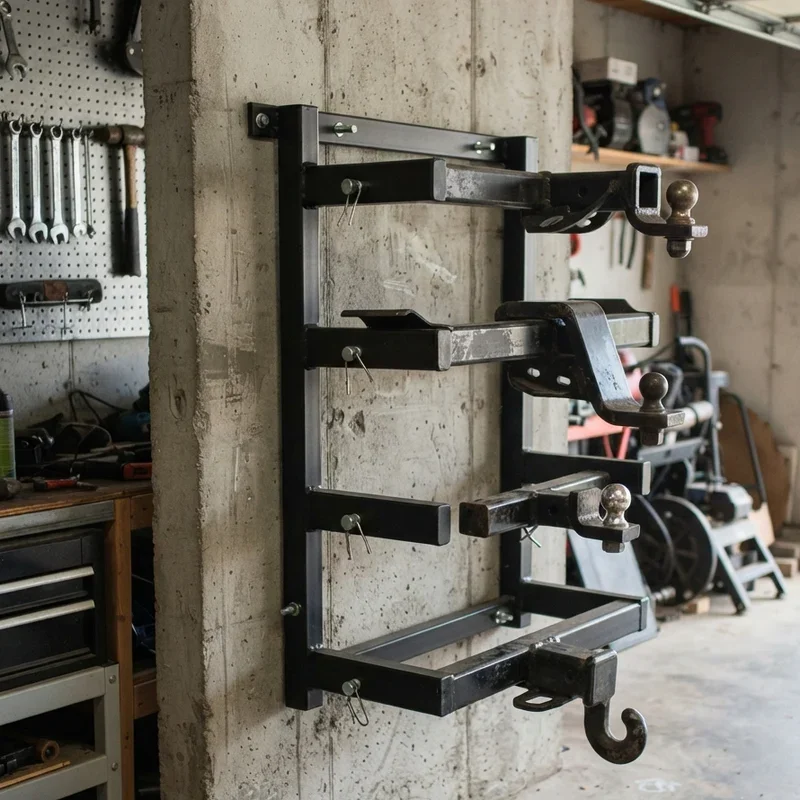
8. Wall-Mounted Multi-Hitch Display Rack
A wall-mounted multi-hitch display rack installs a horizontal steel bar with multiple receiver slots or hanging arms holding several hitch accessories simultaneously across one organized wall-mounted unit, the consolidated display keeping the entire towing equipment collection visible and individually accessible without floor storage consuming walkway space that parked vehicles and garage activities need clear throughout daily garage operation. Multi-hitch racks work like building a coat rack specifically sized for heavy towing equipment where every accessory hangs from its own dedicated arm position on the organized wall display. Select commercial multi-hitch racks rated for the combined weight of all stored accessories. Mount into multiple wall studs distributing the considerable aggregate equipment load.
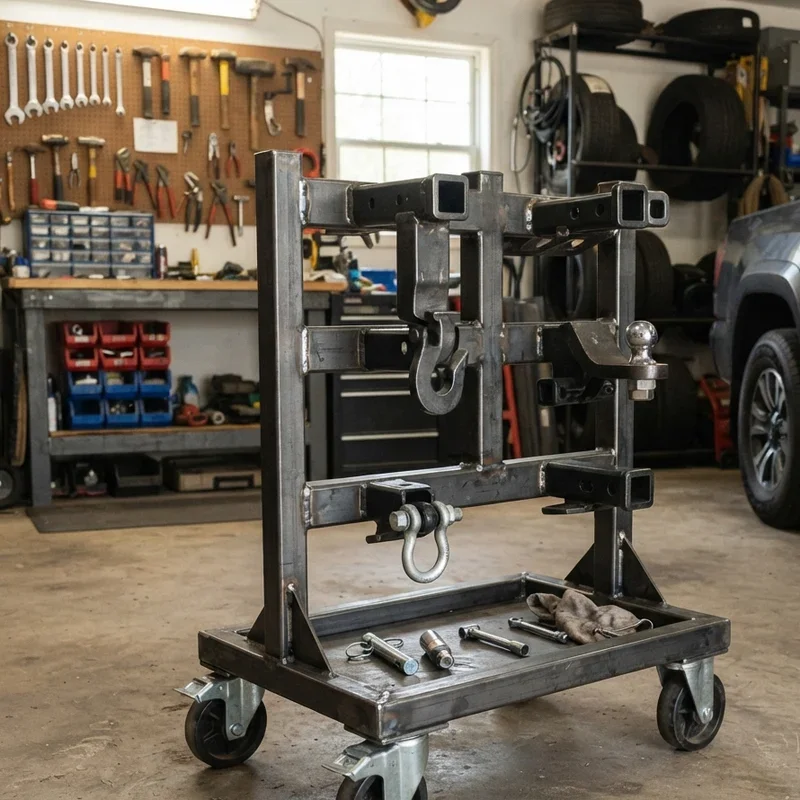
9. Rolling Cart Heavy Equipment Station
A rolling cart heavy equipment station positions hitch accessories on a sturdy wheeled platform that stores against the garage wall and rolls to the vehicle when towing preparation requires equipment transport across the garage floor, the mobile platform eliminating the dangerous manual carrying of heavy ball mounts and carriers across distances where dropped equipment damages flooring and threatens unprotected feet below. Rolling hitch carts work like deploying a tiny equipment delivery vehicle that transports your heaviest towing gear directly to the vehicle bumper without manual carrying. Select heavy-duty utility carts with reinforced shelving supporting concentrated metal equipment weight. Choose carts with locking wheels preventing unwanted rolling during loading.
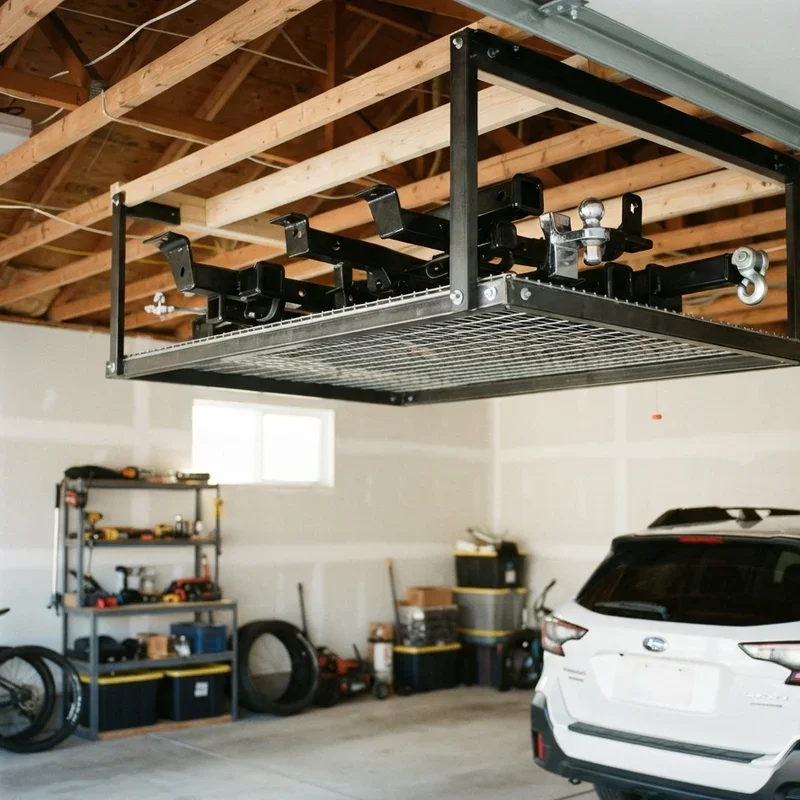
10. Overhead Ceiling Platform Hitch Storage
An overhead ceiling platform creates a suspended storage shelf above the parked vehicle position holding seasonal and infrequently used hitch accessories including cargo carriers, bike racks, and specialty towing equipment in the dead space between the garage ceiling and the vehicle roofline that standard parking positions leave permanently unused throughout every parked hour within the enclosed garage. Overhead platforms work like building a storage attic specifically for towing equipment where seasonal accessories hibernate above the parked vehicle until needed. Install sturdy overhead platforms into ceiling joists rated for the combined weight of stored hitch equipment. Add safety rails preventing stored accessories from sliding off platform edges.
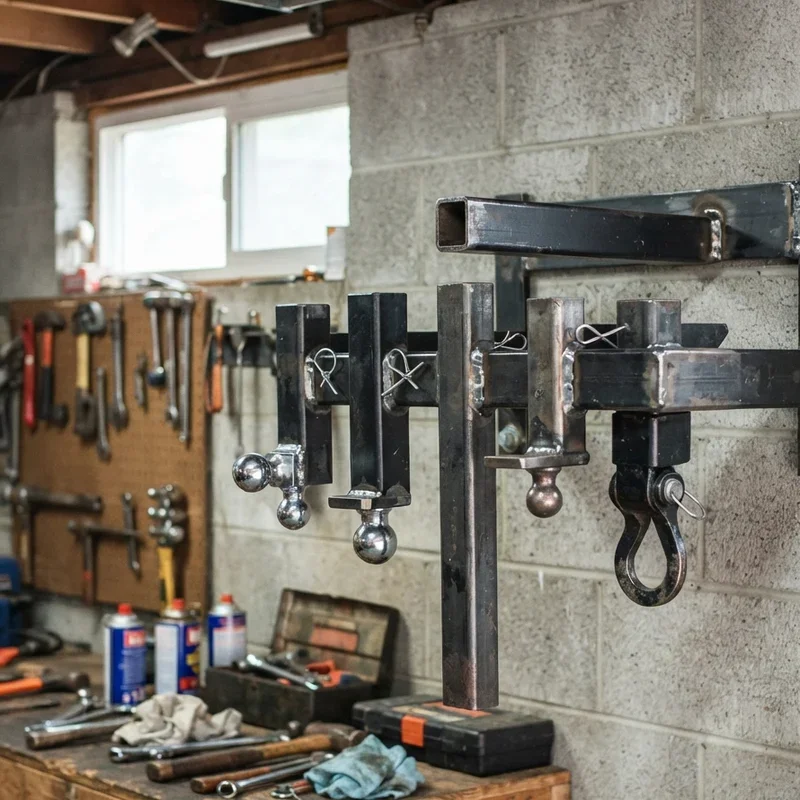
11. Custom Welded Hitch Holder Bracket
A custom welded hitch holder bracket fabricates a steel mounting frame specifically designed to hold your particular hitch accessories using angle iron, flat steel, and basic welding creating a purpose-built storage solution matching your exact equipment dimensions rather than adapting generic commercial products that approximately fit but never quite accommodate the specific accessory collection your towing setup requires within organized storage. Custom welded brackets work like hiring a personal blacksmith to build storage fitting your exact equipment rather than forcing generic solutions onto unique towing accessories. Weld angle iron and flat steel into bracket configurations matching specific hitch accessory dimensions precisely. Mount completed brackets into wall studs using heavy-duty lag bolts.
12. Bucket and Bin Accessory Container
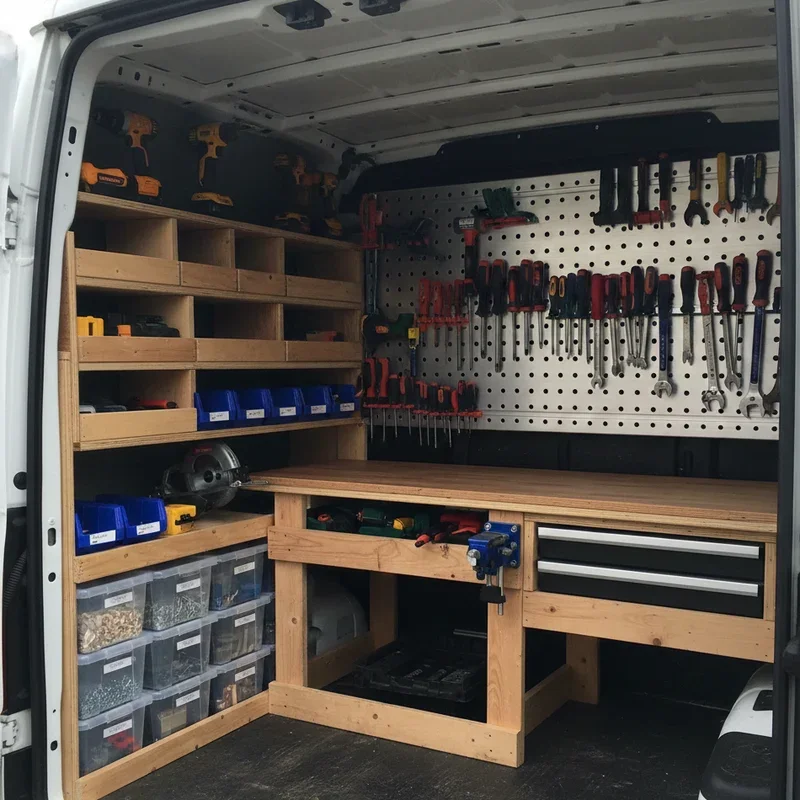
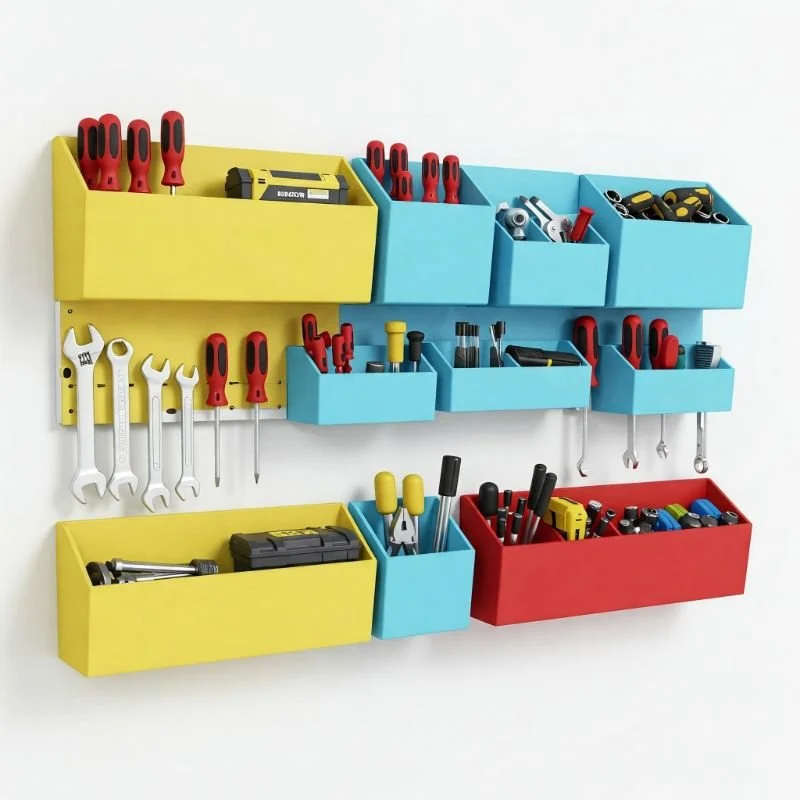
Heavy-duty buckets and bins positioned on garage shelving organize smaller hitch accessories including safety chains, electrical adapters, wiring harnesses, grease containers, and miscellaneous towing hardware within categorized containers that prevent the scattered drawer distribution where small critical towing components disappear between seasonal use periods creating frantic pre-departure searches through multiple disorganized storage locations seeking one essential missing piece. Bucket storage works like building a categorized parts department for your towing accessories where every small component lives in its labeled container permanently. Select sturdy five-gallon buckets or heavy-duty bins providing durable containment for metal accessories. Label each container clearly identifying towing component categories.
13. French Cleat Modular Hitch Wall
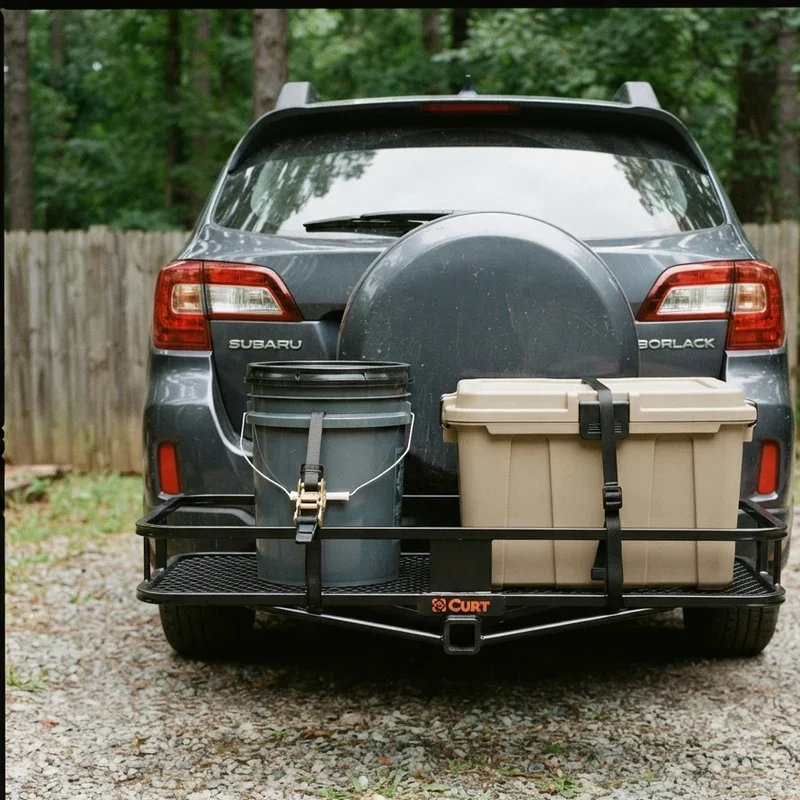
A french cleat modular wall system installs interlocking angled timber strips creating a versatile mounting surface where custom-built tool holders, shelf brackets, and heavy-duty hooks attach and detach freely, the modular system supporting heavy hitch accessories through distributed weight transfer across the angled cleat connection that standard single-point hooks cannot match with equivalent load-bearing security for equipment weighing twenty or more pounds per stored piece. French cleat systems work like building an interlocking wall puzzle where every custom holder snaps into position and removes without tools for instant rearrangement. Install horizontal french cleat strips across wall studs creating the mounting foundation. Build custom accessory holders with matching cleat backs.
14. Bike Hook Adapted Hitch Hanger
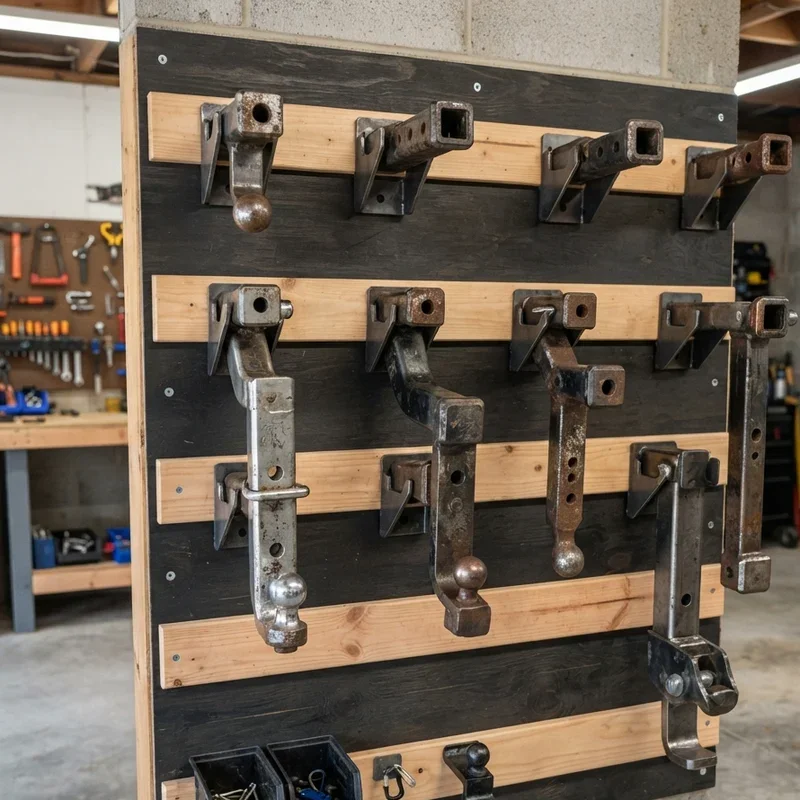
Bike hooks adapted for hitch storage mount heavy-duty ceiling or wall hooks holding ball mounts and receiver accessories by their shanks in the same hanging position that bicycle storage hooks support wheel rims, the existing hardware providing adequate weight capacity for most standard hitch components when properly installed into structural framing members supporting the suspended equipment load from above securely throughout extended storage periods between seasonal towing activities. Bike hook hitch hangers work like repurposing bicycle parking technology for towing equipment where the same sturdy hook design holds different heavy objects equally securely. Select vinyl-coated heavy-duty hooks preventing surface scratching on hitch accessory finishes. Install into ceiling joists or wall studs at comfortable reaching height.
15. Labeled Shelf Categorized Hitch Station
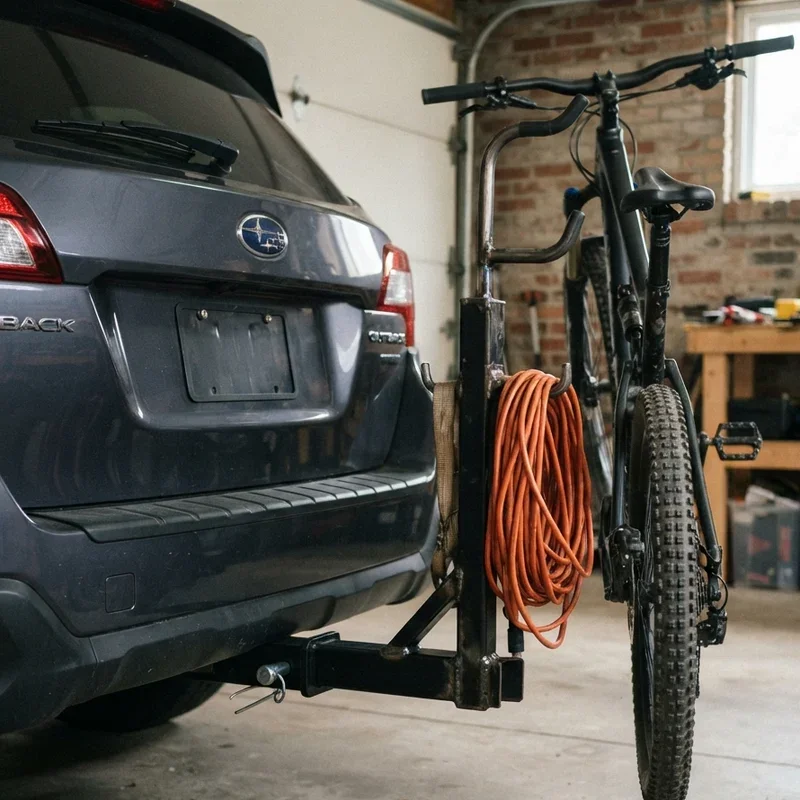
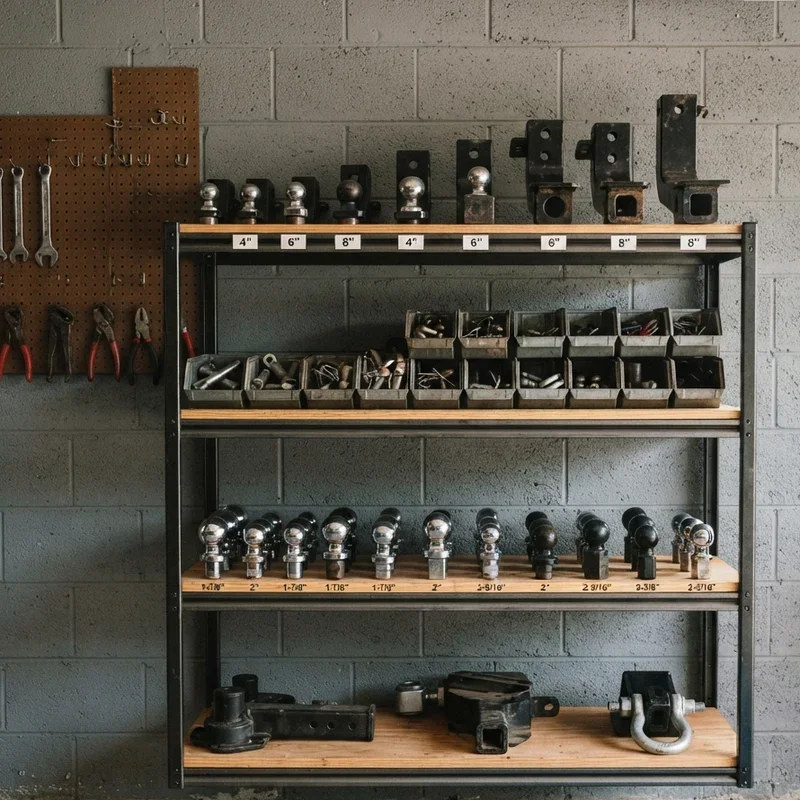
A labeled shelf categorized hitch station organizes all towing accessories across dedicated shelf sections where every component category occupies a clearly marked zone including ball mounts on one shelf, electrical connectors on another, safety chains grouped separately, and miscellaneous hardware sorted into labeled bins creating a comprehensive towing equipment library where locating any specific accessory requires only reading the corresponding shelf label rather than searching through unsorted equipment piles. Labeled shelf stations work like building a towing equipment filing system where every accessory category has its own clearly marked address within the organized storage library. Install heavy-duty garage shelving rated for concentrated metal equipment weight loads. Label each shelf section clearly identifying towing component categories.
Conclusion
Receiver hitch storage ideas prove that heavy towing accessories deserve dedicated, organized garage positions that eliminate the dangerous floor-level scattering creating tripping hazards, rust exposure, and frustrating equipment searches that poorly stored hitch components impose on every towing preparation session requiring specific accessories located quickly before departure deadlines and trailing vehicle connections demand immediate organized equipment access from responsible, safety-conscious vehicle owners maintaining proper towing preparedness throughout every recreational and working season ahead. From wall-mounted receiver brackets to overhead ceiling platforms and french cleat modular systems, these fifteen ideas demonstrate that organized hitch storage improves garage safety and efficiency dramatically. Choose the solutions matching your equipment collection, then tow with organized confidence permanently.
Frequently Asked Questions
Q1: What is the best way to store heavy ball mounts to prevent rust and corrosion?
A: Wall-mounted receiver brackets keep ball mounts elevated, ventilated, and coated with protective anti-rust spray.
Q2: How much weight can a standard wall-mounted hitch storage bracket safely support?
A: Properly stud-mounted brackets support 50 to 100 pounds depending on hardware and installation quality.
Q3: Should I store hitch accessories greased or clean between seasonal towing uses?
A: Apply light protective grease preventing rust formation during extended storage periods between active towing seasons.
Q4: What garage ceiling storage works best for heavy cargo carriers and bike rack accessories?
A: Heavy-duty overhead platforms mounted into ceiling joists safely support bulky seasonal hitch accessory storage.
Q5: Can I build DIY hitch storage solutions without welding equipment or metalworking skills?
A: Yes, PVC pipe organizers, french cleat systems, and adapted lumber racks require only basic woodworking tools.
Stay up to date with our latest ideas!